Are Faucet and Toilet Supply Lines the Same? A Practical Guide
Are faucet and toilet supply lines the same? This analytical guide explains key differences in fittings and materials, plus practical installation tips to help homeowners avoid leaks.


Are faucet and toilet supply lines the same? In short, no. Faucet supply lines and toilet supply lines differ in fittings, connection types, and typical usage. Using the wrong line can cause leaks or poor performance. This comparison explains the key differences, why compatibility matters, and how to choose the right lines for each fixture, with practical installation tips.
Are faucet and toilet supply lines the same
Are faucet and toilet supply lines the same? The quick answer hinges on fixture design, connector standards, and intended use. For most homeowners, these lines are not interchangeable because faucets and toilets use different thread types, connector sizes, and materials. When you ask, are faucet and toilet supply lines the same, you must consider where the line connects, the valve type, and the fixture’s shutoff mechanism. Faucet supply lines often connect to a compact under-sink valve with a flexible braided connector, while toilet lines connect to a larger fill valve assembly with its own shutoff valve. Mismatching components can lead to leaks, cross-threading, or failed seals, especially if you force a line onto a valve that does not match. This article, drawing on practical experience, breaks down the differences and how to verify compatibility before replacement.
Material & Size Differences
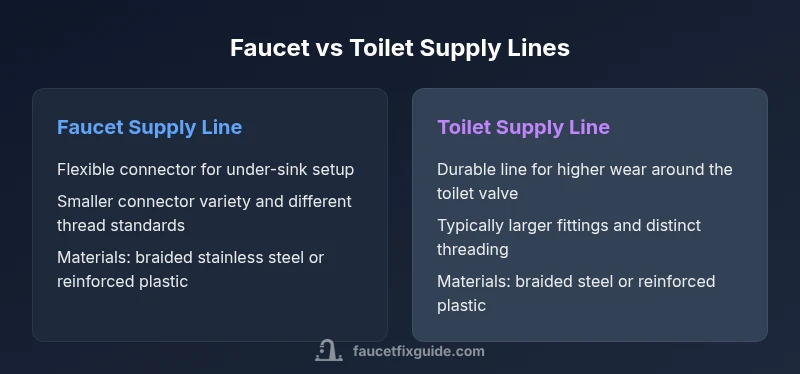
Material and size are core differentiators between faucet and toilet supply lines. Faucet lines typically come as flexible braided hoses designed to fit compact plumbing spaces, with a focus on ease of installation and resistance to kinking. Toilet lines, by contrast, emphasize durability for higher flow scenarios and longer wear at the connection to the toilet’s fill valve. The materials common to both include braided stainless steel and reinforced plastics, but the construction quality and internal ball or check valve components can differ. Understanding these material distinctions helps homeowners select lines that resist corrosion, maintain pressure, and provide dependable shutoff performance, particularly in homes with hard water or frequent fixture changes. When evaluating are faucet and toilet supply lines the same, the material and size are often the first clues that they are not.
From a maintenance perspective, braided lines tend to offer better flexibility and leak resistance, but you’ll still need to confirm compatibility with your shutoff valve and fixture threads. Remember: even small mismatches at the connection point can lead to leaks after a few months of use. This depth of understanding helps homeowners plan replacements more reliably and avoid common mistakes.
Fittings, Connectors, and Compatibility
The second major source of confusion is fittings. Faucet lines use smaller connectors and a wider variety of thread standards, whereas toilet lines rely on larger, more standardized fittings designed for line-to-fill-valve connections. A key question many DIYers ask is are faucet and toilet supply lines the same in terms of connectors? The answer is typically no, due to threading, seal type, and the space around the connection. When replacing either line, verify the valve type (compression, push-fit, or flare) and ensure the new line’s nut and ferrule match the valve’s outlet. If a line is forced onto an incompatible valve, threads can strip or the seal can fail, leading to leaks. In practice, take a quick measurement or bring the old line to the hardware store to compare thread pitch and diameter.
For toilets, you may encounter larger compression fittings and a different nut size than those used for faucets. The risk of incompatibility is reduced when you purchase fixture-specific lines and avoid cross-compatibility assumptions. If you’re unsure, consult the fixture’s installation manual or seek professional guidance.
Installation Considerations and Tools
Installing supply lines requires attention to space, alignment, and secure seating. In many homes, access under a sink is easier than behind a toilet, yet both scenarios demand careful tightening to avoid overtightening and damaging the valve. When you replace faucet lines, keep a small adjustable wrench, line wrench, and plumber’s tape handy. For toilets, ensure you have a wrench suited to the shutoff valve and a steady hand for working in tight spaces. An important part of the are faucet and toilet supply lines the same check is to test fittings after installation with a gentle water run, looking for slow drips that could indicate a loose connection. Do not overtighten, as this can damage plastic fittings or metal threads and create a leak path. Labeling lines by fixture can prevent repeat mistakes in future renovations.
Common Failures and Diagnostics
Leaks are the most common failure mode for supply lines, often appearing at the connection to the valve or at the nut where the line meets the fixture. If you notice a persistent drip or seep, it’s usually due to a worn washer, damaged ferrule, or an improper seal. Diagnosis should start with verifying the correct line is installed for the fixture, then inspecting the entire length of the line for signs of wear, bulges, or kinks. If a line is stiff, cracked, or shows exposed wire in the braid, replace it. A leak at the shutoff valve may indicate a failing gland nut or valve packing; replacing the valve or tightening carefully with a correct tool is advisable. Regular inspection can catch problems before they become flooding events, especially in homes with older lines or mineral buildup from hard water, which can strain seals over time.
Replacement Guidelines and Quick Checks
When replacing supply lines, select fixture-specific lines rather than relying on generic ones. Check the fixture’s manual or manufacturer recommendations and compare the new line’s fittings to the valve outlet. After installation, perform a slow water test and watch for any drips along the seam and at the nut. Use leak dye or food-safe color during testing to easily spot dampness. If you notice any seepage after a test, re-tighten carefully or replace the line. For renters or DIY enthusiasts, keep a small inventory of common line sizes so you can quickly address leaks without waiting for a service call. Always shut off the main supply before removing any line, and open the faucet or toilet valve to relieve pressure before reassembly.
Maintenance Tips for Longevity
Proactive maintenance extends the life of faucet and toilet supply lines. Periodically inspect lines for signs of wear, corrosion, or hard-water buildup near fittings. Wipe connections to remove mineral deposits that can compromise the seal. If you live in an area with hard water, consider installing a water-softening filter upstream to reduce mineral damage to lines and fixtures. Replacing lines every five to ten years, depending on use and water quality, is a prudent maintenance interval. Store spare lines in a labeled kit, including two connectors and the appropriate wrench, so you’re ready for a quick swap if a leak appears. Finally, ensure you’re using the correct line for the fixture to avoid the are faucet and toilet supply lines the same error in future projects.
Authority Sources and References
For safety and installation guidance, consult credible sources and manufacturer guidelines. These references provide general safety recommendations and best practices for household plumbing without replacing professional judgment. https://www.epa.gov/environmental-management-and-plumbing-systems (EPA safety references) • https://www.osha.gov (occupational safety guidelines relevant to plumbing work) • https://www.cdc.gov (public health and safety considerations related to water systems)
Practical Verification Steps at Home
To verify are faucet and toilet supply lines the same in your home, perform a quick visual check: note the connector type at the valve, the line length, and any labeling on the line itself. Compare with the fixture’s manual or the manufacturer’s website. If you see mismatched threading, damaged gaskets, or persistent leaks after installation, replace with fixture-approved lines and re-test. For a reliable outcome, document the installation, save the model numbers, and keep warranty information handy. If you’re uncertain, contact a licensed plumber to confirm compatibility before finalizing the replacement.
Comparison
| Feature | Faucet supply line | Toilet supply line |
|---|---|---|
| Connector size | Smaller, multiple standards | Larger, distinct standards |
| Fitting types | Compression and push-fit common | Compression and flare common |
| Material options | Braided stainless steel, plastic | Braided stainless steel, reinforced plastic |
| Installation considerations | Under-sink space, flexible routing | Behind or around toilet area, easier access to shutoff |
| Common issues | Leaks at faucet connections, wear at fittings | Leaks at toilet valve connections, line wear |
The Good
- Helps prevent leaks when matched correctly
- Standardized fittings reduce compatibility risk
- Easy access to replacements for DIYers
- Flexible braided lines improve ease of routing
- Clear labeling aids maintenance
What's Bad
- Using the wrong line can cause leaks or poor performance
- Not all lines are interchangeable across fixtures
- Different fixtures require fixture-specific replacements
- Incorrect installation may damage threads or seals
Always use fixture-specific supply lines; do not interchange faucet and toilet lines.
Mismatch can cause leaks and performance issues. The safest approach is to match the line to the fixture, verify compatibility with the shutoff valve, and follow manufacturer guidelines. The Faucet Fix Guide team supports this approach for consistent, safe results.
Frequently Asked Questions
Are faucet and toilet lines interchangeable?
In most cases, faucet and toilet supply lines are not interchangeable due to different fittings, sizes, and valve connections. Always confirm the fixture’s recommended line type before replacing.
Typically not interchangeable; check the fixture specs and use the matching supply line.
Can I reuse an old line for a new faucet or toilet?
Reusing an old supply line is not recommended. Over time, internal wear, cracking of the braid, or deterioration of seals can lead to leaks. Use a new line that matches the fixture.
Better to replace with a fixture-specific line for reliability.
What should I do if a leak appears after installation?
Shut off the water supply immediately, recheck the connections for tightness and compatibility, then replace the line if damage is suspected. If leaks persist, call a professional.
If it leaks, shut the water off and recheck or replace the line.
Do there are code requirements for supply lines?
Local codes require using approved, undamaged supply lines with proper shutoff valves and fittings. Always follow manufacturer recommendations and consult a licensed plumber if in doubt.
Follow local code and manufacturer guidelines for safety.
What materials are best for supply lines?
Braided stainless steel lines are common for durability and flexibility; reinforced plastics are an alternative in tight spaces. Choose corrosion-resistant options and compatible fittings for long-term reliability.
Braided steel is a solid, durable choice.
What’s the easiest way to verify compatibility at the store?
Take the old line or the fixture’s model number to the store and compare fittings and thread standards. Store staff can help match a fixture-specific line.
Bring the old line or model number to compare fittings.
Top Takeaways
- Always verify fixture compatibility before buying lines
- Know your connector types and threading when shopping
- Test connections for leaks after installation
- Keep a small parts kit for quick DIY replacements
- Check local codes and manufacturer guidelines during replacement