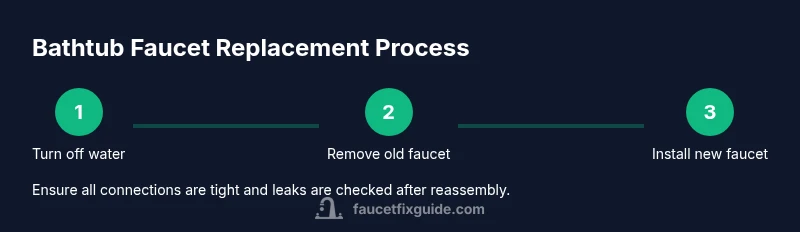
How to Replace a Faucet for a Bathtub
A practical, step-by-step guide to replacing a bathtub faucet, from turning off the water to testing for leaks. Learn tools, tips, and safety for a successful DIY upgrade.


Goal: You can replace a bathtub faucet confidently from shutoff to test. This guide covers selecting a compatible faucet kit, safely removing the old hardware, installing the new faucet body and handles, reconnecting supply lines, and verifying leaks. Includes safety tips for different configurations (single-handle vs. dual-handle) and common mistakes to avoid.
Why replacing a bathtub faucet matters
A bathtub faucet in good condition provides consistent water temperature, strong flow, and a reliable diverter if you have a handheld shower. Over time, mineral buildup, corrosion, and worn seals can cause dripping, reduced efficiency, and even hidden leaks behind the wall. Replacing the faucet can stop wasteful leaks, prevent staining around the tub, and restore ease of use. In addition, newer faucet models often offer improved water-saving features, easier cartridge replacement, and longer lifespans. When you decide to replace, you’ll benefit from knowing your tub’s configuration (single-handle vs dual-handle, the number of mounting holes, and the type of spout). This knowledge helps you choose a compatible faucet kit and plan the installation with less frustration.
Tools and materials you’ll need
Before you start, gather these essentials. Essential items are listed as required so you don’t start and realize you’re missing something.
- adjustable wrench (essential for tightening nuts)
- basin wrench (needed for tight spaces under the tub)
- screwdriver set (Phillips and flathead, essential)
- pliers or channel-lock pliers (grip and twist fittings)
- plumber’s tape (Teflon tape) to seal threaded connections
- replacement faucet kit (ensures you have the right valve cartridge, escutcheon, handles, and spout)
- bucket and old towels (catch drips, protect surfaces)
- silicone caulk or plumber’s putty for sealing joints
- safety glasses (protect eyes during disassembly)
Having these items on hand helps prevent mid-project interruptions and keeps the workflow smooth.
Choosing the right faucet kit for your bathtub
Start by identifying your tub’s configuration and measuring the mounting spread. Bathtub faucets come in single-handle and two-handle designs, with different spout and diverter options. Look for a finish that matches your fixtures (chrome, nickel, bronze) and ensure the kit includes the rough-in hardware and metal escutcheons compatible with your tub. If replacing a shower-tub diverter, verify the faucet kit supports your existing shower connection or handheld diverter. Finally, check cartridge compatibility and warranty terms. Taking photos of the original setup can help you select the correct model and avoid mismatches during installation.
Preparing for the replacement: safety and prep steps
Begin by turning off the water at the nearest shut-off valves, then the main valve if needed. Open a nearby faucet to drain residual water and relieve pressure. Lay towels and a drop cloth to catch spills and protect surfaces. Remove the old trim escutcheons and unscrew the handles to expose the valve and mounting hardware. If soldered connections exist, you may need to proceed carefully or seek professional help. Always verify there is no pressure by giving the tub faucet a quick test with the lever before removing any parts.
Common configurations and how they affect installation
A lot of tub faucets are configured in three common ways: single-handle, two-handle, and diverter tub spout. With a single-handle model, you’ll replace the cartridge and trim, focusing on valve compatibility. A two-handle setup requires aligning hot and cold with a mounting plate and escutcheon, ensuring the new handles fit the existing openings. A diverter tub spout adds complexity; verify the spout thread type and ensure the new kit’s diverter matches your handheld shower. In all cases, keep track of screws and small parts, and label hot/cold lines to avoid mix-ups.
Maintenance after installation
After installation, run water at both hot and cold and watch for leaks for several minutes. Re-check fittings after 24 hours in case of settling. Clean the faucet and escutcheon with a mild cleaner to avoid corrosive buildup. Replace washer seals or cartridges per manufacturer recommendations on a schedule to prevent future leaks. Consider integrating a water-softening solution if you notice mineral buildup on fixtures.
Safety and code considerations
Follow local plumbing codes when replacing a bathtub faucet, especially if you encounter concealed plumbing behind walls. If you see pinned or corroded pipes, avoid forcing fittings and consult a licensed plumber. Wear safety glasses and gloves during disassembly and drilling, if necessary. Dispose of old parts responsibly and consult manufacturer replacement parts to ensure warranty validity.
Tools & Materials
- Adjustable wrench(Sizes 6-12 inches are most common)
- Basin wrench(Useful for tight spaces under tub fixtures)
- Screwdriver set (Phillips & flathead)(Have both types on hand)
- Pliers / channel-lock pliers(Grip and twist fittings without marring)
- Plumber’s tape (Teflon tape)(Wrap 3-4 times on threaded connections)
- Replacement faucet kit(Includes cartridge/valve, handles, escutcheon)
- Bucket(Catch water and minimize mess)
- Towels / rags(Protect surfaces and dry spills)
- Silicone caulk or plumber’s putty(Seals deck joints and spout connections)
- Safety glasses(Eye protection during disassembly)
Steps
Estimated time: 60-120 minutes
- 1
Turn off the water and prep the workspace
Shut off hot and cold valves, then open the tub faucet to release pressure. Place towels on the tub surround and lay a drop cloth to catch spills. Photograph valve orientation before removing parts.
Tip: Having a photo reference makes reassembly easier and reduces errors. - 2
Remove handles and escutcheons
Locate set screws with a small screwdriver or Allen wrench, loosen, and lift off the handles and trim. Remove escutcheons to expose the valve nut and mounting hardware. Keep screws organized for later reassembly.
Tip: Keep each handle’s screws with its plate to avoid mix-ups. - 3
Disconnect supply lines
Place a bucket beneath the connections. Using two wrenches, loosen the hot and cold supply lines from the faucet body. Cap or tape exposed ends to prevent debris from entering the pipes.
Tip: Use one wrench to hold the valve while you loosen the fitting with the other to avoid twisting the valve stem. - 4
Remove the old faucet body and spout
From under the tub, loosen mounting nuts securing the faucet body. Pull out the old assembly and detach the spout if it’s a separate piece. Inspect the rough-in hardware for wear.
Tip: Note how the spout is threaded or fastened; this helps with the new installation. - 5
Install the new rough-in and cartridge
If your kit uses a cartridge, install it per instructions and seal threaded joints with plumber’s tape. Verify correct orientation and ensure the valve body sits squarely against the deck.
Tip: Always follow the manufacturer’s torque specs to avoid over-tightening. - 6
Mount the new body and escutcheon
Slide escutcheons over the pipes and align the new mounting hardware. Tighten nuts evenly from beneath, keeping the trim aligned with the wall or tub deck.
Tip: Do not overtighten the mounting nuts; this can crack the deck or valve body. - 7
Reconnect supply lines and handles
Reconnect hot and cold lines, applying plumber’s tape on male threads if needed. Reattach handles and trim plates, then tighten set screws securely.
Tip: Double-check that hot and cold lines are not swapped—test later with water on. - 8
Test, seal, and finalize
Turn the water back on and slowly test hot and cold. Look for leaks around the fittings and deck. If needed, apply silicone sealant around the escutcheon and spout base to seal gaps.
Tip: Let water run for several minutes to ensure there are no hidden leaks.
Frequently Asked Questions
Do I need to replace the entire valve cartridge or just the trim?
If the cartridge is worn or corroded, replacing the cartridge often resolves leaks and temperature issues. In other cases, upgrading the trim and escutcheon alone can improve appearance and function. Check compatibility with your new kit before deciding.
If the cartridge is worn, replace it. Sometimes updating the trim is enough if the cartridge is still good.
Can I replace a bathtub faucet without removing the tub?
In many cases you can replace the faucet without removing the tub, but some configurations or hidden plumbing may require access behind walls. If you feel resistance or space is tight, it’s wise to consult a professional.
Usually you can replace it without removing the tub, but there are exceptions depending on access.
What tools are essential for a bathtub faucet replacement?
You’ll need a wrench, basin wrench, screwdriver set, pliers, plumber’s tape, and the replacement faucet kit. Depending on your setup, you may also need a drill or silicone sealant.
A wrench, basin wrench, screwdrivers, pliers, tape, and the new faucet kit cover most jobs.
How long does a typical tub faucet replacement take?
For most DIYers, plan about one to two hours, depending on accessibility and kit compatibility. If you encounter surprises behind the wall, it could take longer or require professional help.
Most replacements take about an hour or two, depending on space and kit compatibility.
What if leaks persist after replacement?
Shut off the water and inspect all connections for proper torque and tape. Re-tighten fittings gradually and replace any worn washers or cartridges. If leaks continue, the kit may be incompatible or the rough-in may be damaged.
If leaks persist, check torque and seals, retighten gradually, and consider incompatible parts or damaged rough-in.
Is professional help required for hidden plumbing behind tiles?
Yes. When plumbing is concealed behind tile, a professional can prevent wall damage and ensure proper sealing. They can also verify code compliance and warranty considerations.
Yes—hidden plumbing behind tiles often needs a pro to avoid damage.
Watch Video
Top Takeaways
- Identify your faucet type before buying a replacement.
- Shut off water and test for leaks after installation.
- Follow detailed steps to avoid cross-threading or misalignment.
- Choose a finish and kit that matches existing fixtures for best results.