Why Is My Faucet Water Brown? Quick Troubleshooting Guide
Discover why faucet water turns brown and how to diagnose and fix common causes like rust, sediment, and mineral buildup. Step-by-step troubleshooting from Faucet Fix Guide.


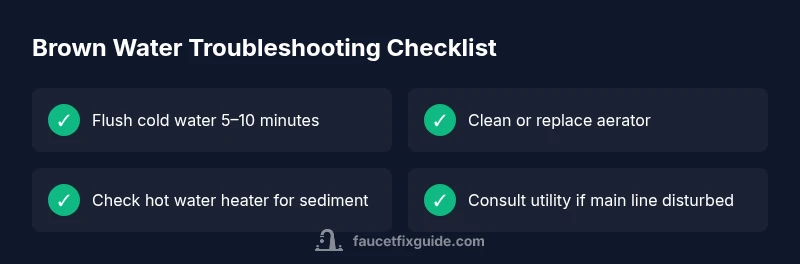
Brown water from a faucet is typically caused by sediment, rust, or mineral buildup in pipes or fixtures. Start by flushing the line and cleaning the faucet aerator, then test cold water and hot water separately. If color persists, inspect the home plumbing and consider contacting your water utility if a main-line disturbance is suspected.
What causes brown water from a faucet?
If you notice brown or orange-tinted water, the most common culprits are rust from aging pipes, sediment from the water supply, or mineral buildup in fixtures. In some homes, the color appears after a plumbing repair, water main work, or a sudden change in water pressure. When you ask, "why is my faucet water brown?", you’re addressing a symptom of rust and sediment moving through your lines. According to Faucet Fix Guide, most brown-water events are not an immediate health hazard, but they should be investigated and addressed promptly to protect your plumbing and water quality. Metal pipes can corrode slowly, releasing iron oxide that colors the water. Start with the simplest steps and work toward more involved fixes.
Start with the simplest checks
The fastest way to triage is to run cold water from a faucet for several minutes to clear any settled sediment. Check other cold taps in the house to see if the issue is widespread. Remove and clean the faucet aerator; mineral buildup often forms a clog that discolors water. If the water clears, the problem was most likely confined to the fixture. If color persists, move to the next checks and document what you observe. Keep an eye on whether the discoloration affects multiple fixtures, which would point toward a broader plumbing or supply issue.
Hot water vs cold water differences
Compare color between hot and cold water. If brown only appears in hot water, the culprit is typically the water heater. Sediment settles in the bottom of the tank and is drawn into the hot supply. If cold water turns brown, the issue may be with incoming supply or a more widespread pipe corrosion. In either case, continue with careful steps and consider professional assessment if the color remains. Note whether the color changes after long hot-water use, which can indicate heater-related sediment.
Inspect the aerator and faucet cartridge
A remove-and-clean approach is often the most effective. Unscrew the aerator from the faucet spout and rinse it under running water, removing mineral deposits. If the aerator is clogged, replace it with a clean, properly rated unit. Behind the aerator, the faucet cartridge can also accumulate sediment; follow manufacturer instructions to flush or replace the cartridge if needed. After cleaning, reassemble securely to prevent leaks and re-test both cold and hot water.
Check the main supply and other fixtures
If several fixtures are discolored, especially after a known water-main project or line flushing, the color may come from the broader water system. Wait 24–48 hours and run cold water from several fixtures to observe. If color persists, contact your water utility to confirm whether there was a recent disturbance and if the issue is being resolved. Keeping neighbors informed can help determine if the issue is municipal rather than localized to your home.
Safety considerations and health cautions
Brown water can indicate rust or copper corrosion. While it’s not always hazardous, avoid drinking discolored water if you notice metallic taste or if you have a home with lead solder or lead pipes. Use bottled water for drinking and cooking until your water tests show safe levels. If in doubt, consult a licensed plumber and your local water utility. Do not ignore alarms such as persistent odor or abnormal taste.
Preventive maintenance to avoid future brown water issues
Schedule regular aerator cleaning, flush routines, and periodic water heater maintenance to reduce future brown-water events. Use a sediment filter if your supply shows high sediment levels and replace corroded fixtures when necessary. Keeping your plumbing clean reduces the frequency of brown water events and extends the life of your fixtures. Establish a simple quarterly check, and log any discoloration to spot patterns early.
Quick scenarios and next steps
If you see brown water after repairs or during heavy water use, flush, inspect fixtures one by one, and record which taps show discoloration. If the problem spreads to hot and cold lines, escalate to a professional evaluation. The key is to address symptoms promptly and prevent mineral buildup with routine maintenance. When in doubt, rely on a professional assessment to avoid misdiagnosis and unnecessary replacements.
Steps
Estimated time: 60 minutes
- 1
Gather safety gear and tools
Assemble gloves, pliers, a bucket, and towels. Turn down any nearby electrical devices and ensure you have good lighting. This helps you work safely and keep the area clean.
Tip: Wear eye protection when handling rusty pipes or removing fixtures. - 2
Flush the cold supply at the affected faucet
Run cold water from the faucet for 5–10 minutes to clear settled sediment. Check if the water color improves and note any remaining discoloration. If possible, run multiple cold taps to gauge the extent of the issue.
Tip: Open a second cold tap to speed up flushing if you suspect widespread sediment. - 3
Test hot water separately
Turn on the hot water at the same faucet (or at a nearby hot-water tap) and observe color changes. If hot water is brown but cold is clear, the heater is likely the source. Take note of the duration of brown color after turning off the taps.
Tip: Do not run hot water for too long in an old tank to avoid scalding hazards. - 4
Inspect and clean the aerator and cartridge
Unscrew the aerator, rinse under running water, and scrub with a small brush. If deposits remain, replace the aerator. If the faucet has a cartridge, flush or replace per manufacturer instructions.
Tip: Keep the aerator parts organized to reassemble correctly. - 5
Check the main supply and other fixtures
If several fixtures are discolored, the issue is likely systemic. Wait a day or two and retest; or contact the water utility to confirm any ongoing work.
Tip: Record dates and which fixtures are affected to speed up diagnostics. - 6
Assess safety and health implications
If the house has lead pipes or solder, consider testing your water for lead and avoiding drinking or cooking with the water until cleared by professionals.
Tip: Use bottled water for drinking until results are known. - 7
Implement preventive maintenance
Schedule regular aerator cleaning, flush routines, and water heater maintenance to reduce future brown-water events.
Tip: Install a sediment filter if your water shows ongoing particulate content. - 8
Know when to call a plumber
If discoloration persists after all checks, or you suspect pipe corrosion or lead, contact a licensed plumber for a diagnostic and repair plan.
Tip: Professional help can prevent long-term damage and health risks.
Diagnosis: Brown or orange-tinted water from a faucet
Possible Causes
- highRusty or corroded pipes
- mediumSediment buildup in pipes or water heater
- highAerator or faucet cartridge mineral buildup
- lowMunicipal main-line disturbance or recent flushing
- lowLead pipes or lead solder in older homes
Fixes
- easyFlush cold and hot lines for several minutes
- easyClean or replace the faucet aerator
- mediumFlush the water heater or replace the anode rod if needed
- easyContact the water utility to check for main-line issues
- hardPlan pipe replacement or fixture upgrades for severe corrosion
Frequently Asked Questions
Why is my faucet water brown?
Brown water is usually caused by rust, sediment, or mineral buildup in pipes or fixtures. Start with flushing and aerator cleaning, then inspect the heater and main supply if necessary.
Brown water usually comes from rust or sediment. Start by flushing and cleaning the aerator, then check the main supply if it persists.
Is brown water dangerous?
Brown water is typically not immediately dangerous, but it can indicate corrosion or lead in older homes. Avoid drinking it until you’ve tested the water or consulted a plumber.
It’s usually not immediately dangerous, but it can signal corrosion or lead. Avoid drinking until you’ve checked with a professional.
Should I flush cold or hot water first?
Begin with the cold water line to clear most sediment. If hot water remains discolored, check the water heater for sediment buildup.
Start with cold water, then test hot water if needed to pinpoint the source.
Could the aerator cause brown water?
Yes. A clogged aerator can discolor water; cleaning or replacing it often resolves the issue.
The aerator can cause discoloration; cleaning or replacing it usually fixes it.
When should I call a plumber or utility?
If discoloration persists after basic checks or if you suspect lead or widespread pipe corrosion, contact a licensed plumber and your water utility.
Call a plumber or your utility if it doesn’t clear after checks or you suspect lead.
Watch Video
Top Takeaways
- Start with aerator cleaning and line flushing
- Hot vs cold color helps identify the source
- Widespread discoloration requires utility involvement
- Safety first: avoid drinking discolored water if lead is possible
- Regular maintenance prevents future brown-water issues