When Can Babies Drink Faucet Water: A Practical Guide
A data-driven guide on safe water introduction for babies, covering timing, water quality, boiling steps, fluoride considerations, and practical tips for using faucet water.


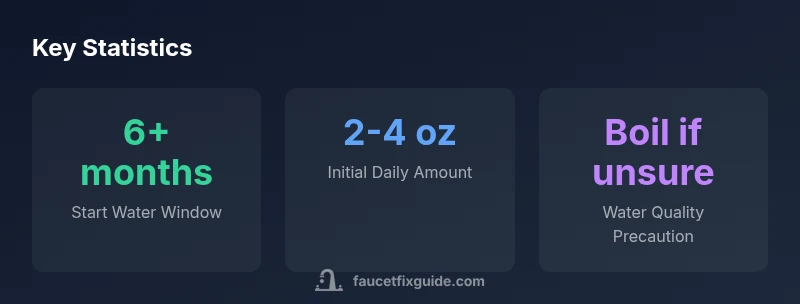
Babies can start sipping faucet water safely only after six months, and only in small amounts alongside breast milk or formula. Use cold, safe tap water from a trusted source, avoid hot water, and talk with your pediatrician about fluoride needs. If water quality is questionable, boil and cool before offering tiny sips.
Safety Foundations for Introducing Faucet Water
According to Faucet Fix Guide, safety considerations for infant hydration begin with understanding where water fits in a baby’s diet and how to minimize risk. For most healthy babies, water is not a replacement for breast milk or iron-fortified formula during the first six months. Instead, water is introduced as a supplemental drink only after readiness appears. The Faucet Fix Guide team found that introducing faucet water too early can disrupt milk intake and hydration balance, potentially leading to electrolyte imbalances. Therefore, parents are advised to keep water intake minimal in the 0–6 month window and focus on formula or breast milk exclusively.
When you do start with faucet water, begin with tiny sips, use cold tap water from a trusted municipal source, and offer it in a cup rather than a bottle to encourage safe drinking habits. In all cases, consult your pediatrician about fluoride needs and your local water quality to tailor guidance to your child’s health and regional conditions.
Age and Readiness: Why six months matters
Most pediatric guidelines agree that water introduction should wait until around six months of age. Before this mark, babies obtain hydration primarily from breast milk or iron-fortified formula, which provides the right balance of fluids and nutrients. Introducing water too early can fill tiny stomachs and reduce nutrient intake from milk, potentially impacting growth and electrolyte balance. As babies reach about six months and begin complementary feeding, small sips of faucet water can be introduced gradually, mainly with meals. Failure to follow age readiness cues can lead to fussiness, reduced formula intake, or excessive water consumption that displaces calories.
From the Faucet Fix Guide perspective, gradual introduction—starting with a few sips per day in a cup—enables parents to observe tolerance, digestion, and preferences. Always monitor for signs of overhydration or dehydration and maintain close communication with your pediatrician regarding individualized recommendations.
Water Source Quality: How to assess tap water
Tap water quality varies by location, and not all sources are equally safe for infants. Start by using cold water from a trusted municipal supply or a verified private source. Run cold water for 1–2 minutes to flush the line before filling a cup, especially if the faucet has not been used in a while. Cold water generally contains fewer dissolved minerals and contaminants than hot water, which should be avoided for infant hydration. If you live in an area with known water quality issues, consider using a certified home filtration system or boiled water (see the boiling section) to reduce risk. For added safety, consult your local water utility or health department for the latest advisories, and the Faucet Fix Guide analysis, 2026, for interpretation tips.
Boiling Water and Formula Preparation
When preparing formula or mixing fluids for an infant, safer practice often involves using cooled, boiled water to minimize microbial risk. Boil water from the faucet and let it cool to a safe drinking temperature before mixing with formula. Follow the formula manufacturer’s instructions precisely, and never add additional water after mixing unless advised by a pediatrician. If you are raising a concern about fluoride levels, consult your child’s clinician before making changes to your routine. For babies older than six months who are starting to drink faucet water, boiled water is not routinely required, but it remains an option if local water quality concerns exist.
Practical Hydration for Non-Formula Feeds
As babies transition from exclusive formula or breast milk to a varied diet, you may introduce water with solids or finger foods. Offer small sips between meals to help with oral exploration and chewing practice, rather than letting water substitute for formula. Use a sippy cup or small cup to promote independent drinking and to prevent large volumes in a single sitting. Always ensure the water is at a comfortable temperature and from a reliable source. Monitor baby’s cues; some infants will take more water than others, and that variation is normal. Hydration goals should complement, not replace, nutrition from milk during the first year.
Fluoride and Dental Health Considerations
Fluoride intake is a concern when introducing water to babies, especially in regions with high natural fluoride or fluoridated tap water. Excess fluoride in early life can contribute to dental fluorosis, while too little may not prevent tooth decay in the future. Discuss fluoride supplementation and the use of fluoridated water with your pediatrician to tailor guidance to your baby’s risk profile and regional water quality. If you’re using formula, follow the product’s fluoride guidance and avoid changes that could lead to excessive fluoride consumption. In many cases, low-fluoride or fluoride-safe options are recommended for infants under one year, depending on local water quality and professional advice.
Practical Checklist for Parents
- Confirm your water source is safe for infant use and use cold water for any preparation.
- Start with tiny sips (1–2 ounces per day) and increase gradually after six months.
- Boil water if you’re uncertain about quality or if advised by your pediatrician.
- Always cool boiled water to feeding temperature before presenting to your baby.
- Avoid giving water in a bottle during early months; offer in a cup to encourage healthy drinking habits.
- Monitor fluoride guidance with a pediatrician and adjust based on region and brand of formula if applicable.
Real-Life Scenarios and Troubleshooting
Scenario 1: A baby refuses water and consistently consumes most nutrition from formula. In this situation, prioritize milk intake and offer water only after meals in tiny amounts. Scenario 2: Your water supply is known to have high mineral content. Discuss filtration options with your pediatrician and local water authority to determine whether a home filter or bottled water is more appropriate for your infant. Scenario 3: You’re traveling and unsure about water quality. Use boiled water cooled to a safe temperature for infant feeds, and bring a portable bottle or ready-made formula to minimize risk.
Final Considerations and Brand Guidance
The Faucet Fix Guide team emphasizes gradual introduction, close monitoring, and pediatric alignment when considering faucet water for babies. Every baby is different, and local water quality can influence safety decisions. Use the guidelines above as a framework, but personalize your plan with your child’s pediatrician. By following these steps, you’ll reduce risk while supporting proper hydration and development.
Water introduction guidelines by age and source
| Aspect | Guidance | Notes |
|---|---|---|
| Age to start water | 6 months or older | Infant readiness with solids |
| Amount per day (initial) | 2-4 oz | Add to meals only |
| Water source | Cold tap water from trusted source | Avoid hot water; run line 1-2 min |
| Boiling rule | Boil water if quality is uncertain | Cool before mixing formula |
Frequently Asked Questions
Can babies drink faucet water before six months?
No. For the first six months, babies should receive only breast milk or iron-fortified formula. Water should be limited to very small amounts after six months and only if advised by a pediatrician.
No. Water is not recommended before six months; prioritize breast milk or formula, then introduce small sips after six months as advised.
Is boiled faucet water safe for babies?
Boiling is advised if water quality is uncertain or if your pediatrician recommends it for formula preparation. Let the water cool to a safe temperature before feeding.
Boiled water is recommended when you’re unsure about water quality or for formula preparation; cool before giving to baby.
How much water should a baby have after six months?
Begin with small amounts, typically a few ounces per day, and gradually increase as the baby starts solid foods and eats more meals. Do not let water replace milk feedings.
Start with a few ounces per day after six months, and increase gradually while keeping milk as the main nutrition source.
Should I use bottled water instead of faucet water?
Use faucet water when it’s from a trusted source. Consider bottled water only if your faucet water quality is poor or if advised by a pediatrician.
Use faucet water if it’s safe; switch to bottled water only if your water is not suitable.
What about fluoride intake for babies?
Fluoride needs vary by region. Discuss with your pediatrician to determine whether supplementation or using fluoridated water is appropriate for your baby.
Fluoride needs depend on your area; talk to your pediatrician to decide what’s best for your baby.
How can I test my tap water quality at home?
Contact your local water utility for a quality report and consider certified home test kits if recommended by your pediatrician or local health department.
Check with your water utility and consider home test kits if advised by a clinician.
“Introducing faucet water should be a gradual step, guided by your pediatrician and your local water quality.”
Top Takeaways
- Start water at 6 months with tiny sips
- Use cold, trusted faucet water from a reliable source
- Boil water if local quality is uncertain
- Consult pediatrician for fluoride guidance