Is Faucet Water Better Than Bottled Water? A Homeowner's Guide
Explore whether faucet water outperforms bottled water in safety, cost, and sustainability. Learn how to test your tap, improve quality with filters, and decide when bottled water makes sense.


The answer to is faucet water better than bottled water depends on context. In most regions, faucet water meets safety standards and costs less while producing far less plastic waste. Bottled water may be preferable when tap quality is uncertain, during travel, or for taste preferences. Taste, odor, and the reliability of the municipal system can tilt the balance, and individual households may opt for filtration to boost tap quality.
Is Faucet Water a Viable Default for Most Homes?
When evaluating whether faucet water is better than bottled water, you must consider local infrastructure, testing regimes, and your daily usage. In many municipalities, tap water is held to rigorous safety standards and is subject to ongoing monitoring, regular disinfection, and public reporting. Faucet water can be a reliable backbone for a household's drinking, cooking, and appliance needs. According to Faucet Fix Guide, the core question hinges on how well your local water system maintains safety, taste, and consistency, and whether your home plumbing introduces any contaminants. If your concern is the broad question of is faucet water better than bottled water, the practical answer is: tap water is generally adequate for most households, especially when you factor in cost and waste reduction. However, the personal dimension—taste preferences, travel needs, and specific contaminants—must guide your final choice. In many homes, upgrading to a home filtration system can bring tap water up to or beyond the perceived standard of bottled water while preserving the environmental benefits.
Water Quality: Safety Standards, Contaminants, and Variability
Water quality is not a single measurement; it is a combination of chemical safety, microbiological integrity, and aesthetic factors like taste and odor. Municipal water systems are regulated at the federal, state, and local levels, typically with routine testing for common contaminants and periodic public reporting. Fluoride addition, disinfectant residuals, and corrosion control are part of standard practice in many areas. Bottled water, by contrast, is regulated by separate agencies and may vary by source and bottling facility. The critical point for most households is that both sources can meet safety expectations when properly managed. Understanding what can go wrong—such as aging pipes, lead solder, or temporary water main issues—helps frame the decision: is faucet water better than bottled water for your situation, or do you need additional safeguards such as filtration or alternative sources? Regular testing, especially after home repairs, is a prudent precaution.
Environmental Footprint and Sustainability: Plastic Waste, Energy, and Transport
A major factor in the faucet water versus bottled water debate is environmental impact. Bottled water creates plastic waste and involves energy for bottling, labeling, transportation, and disposal. Tap water, when consumed at home, minimizes packaging and shipping emissions. Even with filtration systems, the overall footprint can stay lower than bottled water if filters are properly chosen and maintained. The Faucet Fix Guide analysis highlights the long-term environmental benefits of relying on faucet water, especially in households with durable filtration that reduces reliance on single-use plastics. Consumers should weigh ongoing waste and energy costs against labeling accuracy and bottle recycling programs in their region. The broader takeaway is that everyday choices about drinking water accumulate into meaningful environmental outcomes.
Cost and Value: Long-Term Economics of Faucet vs Bottled Water
Cost is a practical layer that often determines the decision. Tap water is usually far cheaper per liter than bottled water, particularly when you account for the cost of empty bottles, purchasing frequency, and storage space. The long-term financial comparison grows clearer when you consider filtration expenditures, maintenance, and filter replacement cycles. Bottled water can be convenient, but the price per liter tends to be higher, and the cumulative expense over months or years often surpasses the cost of improving your tap water with an appropriate filtration system. Beyond dollars, consider the value in convenience, storage, and travel readiness. If you travel frequently or live in a region with sporadic tap water quality, bottles may offer predictable consumption, but with higher costs and waste.
Practical Ways to Improve Faucet Water Quality at Home
Improving faucet water quality can make your tap a strong substitute for bottled water. Start with a basic aerator or inline filter that targets common contaminants and improves taste. If your water contains specific concerns (lead, chlorine byproducts, hardness), choose a filtration system designed to address those issues and replace cartridges on schedule. For households with older pipes, a professional assessment can identify lead or corrosion risks and determine whether a whole-house filtration system or point-of-use unit is most appropriate. Simple steps like flushing the lines after long periods of inactivity and keeping your refrigerator water line clean can also enhance overall quality. Regular testing from an accredited lab or kit ensures your filtration remains effective over time.
When Bottled Water Makes Sense: Practical Scenarios
There are situations where bottled water remains a reasonable choice. Travel, emergency preparedness, and areas experiencing temporary tap water advisories can make bottled water a sensible option. Likewise, for households with specific medical needs or taste sensitivity, a trusted bottled source might reduce anxiety about contaminants. In such cases, balance is key: use bottled water as a targeted solution while continuing to maintain tap water quality with filtration and testing for everyday use. The decision should center on safety, accessibility, and personal preference rather than a one-size-fits-all rule.
Making a Household Decision: A Step-by-Step Guide
To decide whether faucet water is better than bottled water for your home, start with a water quality baseline. Test your tap water for lead, taste, odor, and turbidity. Review your local water quality report and consult a plumber about potential plumbing-related contaminants. If needed, select a filtration system that targets your specific concerns and verify maintenance schedules. Consider your daily volume of drinking water, cost tolerance, and environmental goals. Finally, decide whether to keep bottled water as a contingency option for travel or emergencies. A proactive approach—testing, filtering, and planned substitution—often yields the best balance of safety, cost, and sustainability.
Comparison
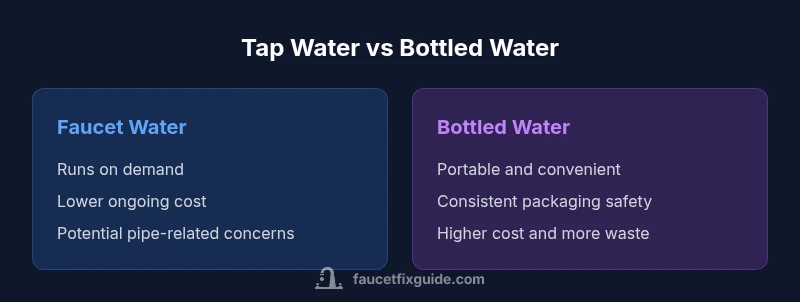
| Feature | Faucet water (tap water) | Bottled water |
|---|---|---|
| Water quality control | Municipal standards with routine testing | Source-dependent; regulated at bottling facilities |
| Cost per liter | Low to very low (home use) with filtration | Higher per liter, especially for premium brands |
| Environmental impact | Low packaging waste; reduced transportation | High plastic waste; energy-intensive bottling and shipping |
| Taste and odor control | Can be improved with filtration; depends on local supply | Consistent taste may vary by brand; some favor specific sources |
| Convenience and accessibility | Unlimited supply at home; needs filtration maintenance | Portable and convenient for travel; separate storage required |
| Safety considerations | Possible pipe-related contaminants; requires proper testing and filtration | Regulated by manufacturers; risks associated with handling and storage |
The Good
- Lower ongoing cost than most bottled water
- Significantly reduces plastic waste
- Easier to monitor and adjust water quality with filters
- Reliable supply connected to home appliances and refrigerators
- Can be filtered to improve taste without buying bottles
What's Bad
- Quality depends on local water system and plumbing; issues may require maintenance
- Initial setup and filter replacements add cost and effort
- Some contaminants require specialized filters; not all filters remove everything
- In areas with very poor tap water, bottled water may be the safer short-term option
Tap water generally outperforms bottled water for most households when properly filtered and maintained
For daily use, faucet water is cheaper, greener, and typically safe. Bottled water remains sensible in travel, emergencies, or when tap quality is uncertain. Pairing tap water with targeted filtration often delivers the best balance of safety, cost, and environmental impact.
Frequently Asked Questions
Is faucet water safer than bottled water?
In many regions, municipal tap water is rigorously tested and meets safety standards. Bottled water is also regulated but can vary by brand and source. The safest approach is to know your local water quality report and consider filtration where needed.
Tap water is safe in many areas, but regulations differ by region. Check your local report and consider filtration if you have concerns.
Do water filters make faucet water as safe as bottled water?
Filters can remove common contaminants and improve taste, but no single filter covers every possible toxin. Choose a filter certified for the contaminants you want to address and replace cartridges as recommended.
Filters help, but pick one matched to your water concerns and replace it on schedule.
Is bottled water more strictly regulated than faucet water?
Both are regulated, with different agencies handling oversight. Tap water follows public health standards for drinking water, while bottled water is regulated by manufacturers and applicable agencies. Local conditions can influence perceived safety.
Both are regulated, but the overseeing agencies differ by source and location.
What contaminants should I test for in faucet water?
Key concerns often include lead, chlorine byproducts, and turbidity. Use a home test kit or an accredited lab to identify these and guide filtration choices.
Test for lead, chlorine byproducts, and clarity to guide filtration.
When is bottled water clearly the better option?
During travel, in areas with unreliable tap water, or if you need a sterile product for medical reasons, bottled water may be preferable. Use it as a targeted solution while maintaining tap water quality where possible.
Travel or medical needs can justify bottled water in certain cases.
How often should I replace home water filters?
Filter lifespan depends on the type and usage. Follow the manufacturer’s schedule and test periodically to ensure continued performance and taste improvements.
Change filters as recommended by the maker and test periodically.
Top Takeaways
- Evaluate local water quality reports before deciding
- Invest in filtration tailored to your contaminants
- Weigh long-term costs against environmental impact
- Keep bottled water as a backup for travel or emergencies
- Regularly replace filters and retest water quality