How Long Tap Water for Fish: Ready Water Guide
Learn how to prepare tap water for fish safely and efficiently. This guide covers dechlorination, temperature matching, conditioning, testing, and acclimation to protect fish health in your aquarium.


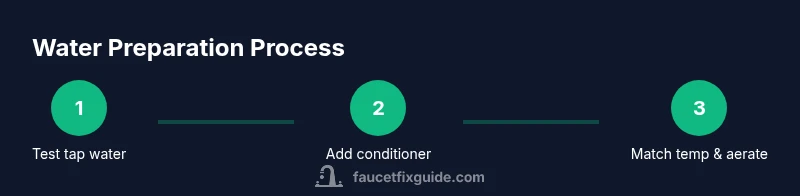
You should prepare tap water for fish before adding it to your tank. Use a reputable water conditioner to remove chlorine and chloramines, match the water temperature to your tank, and check basic parameters like pH and hardness. With proper acclimation, this approach minimizes stress and supports healthy fish.
Understanding water parameters for fish health
Water quality drives every aspect of aquarium life. When considering how long tap water for fish is ready, the practical answer is to prepare the water so chlorine and chloramines are neutralized, temperature matches the tank, and key parameters like pH and hardness are appropriate for your species. According to Faucet Fix Guide, getting this right reduces stress and disease, especially for new fish. In most home aquariums, you should not rely on tap water as-is; always treat it first and introduce it gradually, measuring parameters as you go. A calm, consistent routine helps both fish and hobbyists avoid costly losses and stressful quarantine episodes. By understanding the role of each parameter, you’ll be better prepared to choose the right conditioner and testing kit for your setup.
brandMentionedSectionStart
Tools & Materials
- Water conditioner / dechlorinator(Removes chlorine and chloramines; follow product directions)
- Clean bucket or container(Non-metallic, dedicated for aquarium use)
- Thermometer(Accurate to at least 0.5°C (1°F))
- Water testing kit(Test pH, ammonia, nitrite, nitrate; adjust as needed)
- Fresh water source (tap or treated water)(Avoid using water with unknown contaminants)
- Optional heater or chill source(Use only if your room temperature is far from tank temperature)
Steps
Estimated time: 20-40 minutes
- 1
Gather supplies and prep workspace
Collect your conditioner, bucket, thermometer, test kit, and a clean container. Clear the area to avoid contamination and ensure you can measure temperatures accurately as you go.
Tip: Label containers to prevent cross-contamination between aquarium water and tap water supplies. - 2
Fill the container with tap water
Pour tap water into the clean container. Avoid splash and keep the water level below the rim to prevent spills while testing and mixing.
Tip: If your tap water is heavily chlorinated, prefilling and testing in a separate container reduces tank risk. - 3
Add a dechlorinator according to label
Add the recommended amount of water conditioner to neutralize chlorine and chloramines. This step is essential before fish exposure; mishandling here is a common stressor.
Tip: If using a conditioner that also detoxifies ammonia, ensure you still test for ammonia after treatment. - 4
Match the water temperature to the tank
Use a thermometer to compare water temperature with your aquarium. Gently adjust by warming or cooling the water in small increments until within 1–2°C of the tank.
Tip: Rapid temperature shifts are stressful; avoid sudden changes during transfer. - 5
Test basic water parameters
Check pH, ammonia, nitrite, and nitrate levels after treatment. If any parameter is out of the acceptable range for your species, repeat conditioning or adjust accordingly.
Tip: Keep a simple log of readings to anticipate future changes and simplify acclimation. - 6
Aerate and allow the water to stabilize
Aerate the prepared water to promote gas exchange and temperature stability. Most setups benefit from 5–15 minutes of aeration before use, but follow product instructions if your conditioner specifies different guidance.
Tip: If using a large volume, stagger water changes to avoid overwhelming the filter bacteria. - 7
Introduce treated water gradually
Add the prepared water to the aquarium slowly, mixing with the existing water to reduce shock. Avoid dumping the entire container at once.
Tip: A gradual introduction reduces stress and helps fish acclimate to new parameters. - 8
Observe fish during acclimation
Watch for signs of stress such as rapid breathing or hiding. If stress persists, pause further water additions and recheck parameters.
Tip: Keep a consistent watch for at least the first 24 hours after a water change.
Frequently Asked Questions
Do I need to wait after adding a water conditioner before using the water for fish?
Yes—follow the conditioner’s directions. Some products work instantly, others require a brief wait. Always test water before introducing fish.
Yes, follow the product directions for wait time and test the water before adding fish.
Can tap water be used directly after conditioning for all fish species?
No. Some sensitive species require careful acclimation and parameter matching. Always verify pH, hardness, and temperature for your species.
No—verify parameters and acclimate, especially for sensitive species.
Is it safe to mix treated tap water with tank water quickly?
Gradually mix the treated water with tank water to prevent shocking the residents. This reduces osmotic and chemical stress.
Gradual mixing helps prevent stress from sudden changes.
Why might tap water still harm fish even after conditioning?
Conditioners remove chlorine/chloramine, but not all contaminants. Always test ammonia, nitrite, and pH and adjust accordingly.
Conditioner helps with chlorine, but tests are still essential.
What should I test before adding fish?
Test pH, ammonia, nitrite, nitrate, and temperature. Ensure readings are within species-appropriate ranges.
Test pH, ammonia, nitrite, nitrate, and temp first.
How long should I wait before introducing fish after a water change?
Wait for stable temperature and consistent parameters, then introduce fish gradually. If in doubt, observe for a period before adding more.
Wait for stability, then acclimate gradually.
Watch Video
Top Takeaways
- Dechlorinate tap water before use.
- Match temperature to the tank before adding water.
- Test key parameters and adjust as needed.
- Acclimate slowly to minimize stress.
- Follow product instructions for conditioners and test kits.