How to Remove a Bathtub Faucet: DIY Tutorial
Learn how to safely remove a bathtub faucet with our clear, DIY-friendly guide. Turn off water, protect the area, remove handles, disconnect lines, extract the cartridge, and inspect for wear. Perfect for homeowners and DIY enthusiasts.


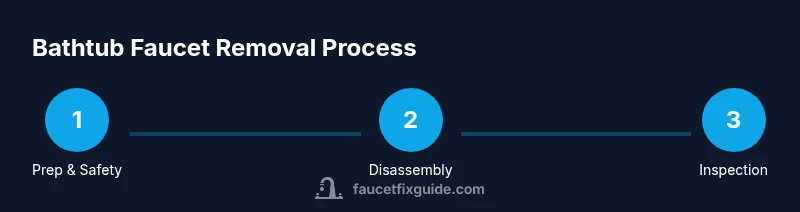
To remove a bathtub faucet, shut off both the hot and cold water supplies, cover the drain, and protect the surrounding area. Begin by removing the handle(s) and decorative escutcheon, then disconnect the supply lines and lift out the cartridge or valve assembly. If you encounter corrosion, use penetrating oil and avoid forcing parts. Consult our step-by-step guide for faucet types.
Overview: Why remove a bathtub faucet might be necessary
A bathtub faucet removal becomes necessary when the cartridge or valve leaks, the handle is loose, or the spout is corroded. Understanding the faucet type (single-handle, two-handle, or widespread) helps you choose the correct approach. For homeowners, DIY enthusiasts, and renters, learning how to remove bathtub faucet is a common maintenance task that prevents bigger water damage and saves money. According to Faucet Fix Guide, following a methodical, safety-first approach minimizes damage while preserving your bathroom aesthetics. This guide emphasizes planning, the right tools, and ensuring a proper reinstall after removal.
Tools and safety considerations
Before you begin, assemble the essential tools and guard against mishaps. Safety first means turning off water, draining the lines, and wearing eye protection and gloves. The right tools reduce effort and prevent damaged fittings. Faucet Fix Guide analysis shows that most faucet removals rely on common hand tools and standard replacement parts.
Removal process overview
This section provides a high-level view of the stages involved in removing a bathtub faucet without repeating the exact step-by-step instructions. Start by identifying whether your faucet is single-handle, double-handle, or widespread, as this determines the retaining hardware and the exact sequence. Plan for potential surprises such as corrosion, stripped screws, or a hidden clip. The goal is a clean disassembly that leaves no parts lost and prepares you for a smooth reinstall. Remember to test water flow after reinstall to confirm a leak-free seal.
Common pitfalls and troubleshooting
Common mistakes during bathtub faucet removal include forgetting to shut off water, forcing components, or losing small parts like screws or retaining clips. Poor access behind the tub wall can hide cross-threaded connections or damaged seats. Take photographs of each stage, label parts, and work slowly to avoid damage to the valve body or surrounding tile.
Aftercare: reinstalling or upgrading
After removal, inspect the valve seats, O-rings, and cartridge for wear. Decide whether to replace the cartridge or seals, especially if leaks persist. When reinstalling, ensure threads are clean, apply plumber’s tape to connections as needed, and hand-tighten before final wrench-tightening to avoid cross-threading. Proper cleanup now prevents future leaks and extends faucet life.
Safety and maintenance reminders
Always wear protective gear and work in a well-lit area. Keep a small container to hold screws and a magnet on hand to recover tiny parts. After reassembly, slowly turn the water back on and check for leaks at every joint. Regular maintenance, including cartridge replacement intervals and aerator cleaning, helps prevent future issues.
Tools & Materials
- Adjustable wrench(18-24 mm range)
- Basin wrench(Helpful for tight spaces behind tub)
- Flathead screwdriver(For set screws or plates)
- Phillips screwdriver(Cross-head screws)
- Allen wrench set(For handles with set screws)
- Channel lock pliers(Extra grip for stubborn fittings)
- Bucket(Catch water from lines)
- Towels or rags(Protect surfaces and soak up spills)
- Plumber's tape(Seal threads on reassembly)
- Replacement cartridge (optional)(Only if the cartridge shows wear)
- O-ring kit (optional)(For worn seals)
- Safety goggles(Protect eyes from debris)
- Work gloves(Grip and skin protection)
- Flashlight(Better visibility in wall space)
Steps
Estimated time: 45-75 minutes
- 1
Shut off the water supply
Locate the local shutoffs for hot and cold water and turn them clockwise until fully closed. Then open the faucet to relieve pressure and verify no water is coming through. This prevents a messy spill and protects the valve internals.
Tip: Double-check both hot and cold lines are off before proceeding. - 2
Remove the handle
Use the appropriate screwdriver to remove the handle grub screw or decorative screw, then lift the handle straight off. If the handle is stubborn, apply a gentle twist with pliers wrapped in cloth to avoid marring.
Tip: Note the handle orientation and take a photo for reference during reinstallation. - 3
Remove the escutcheon/trim plate
Gently pry off the decorative plate with a flat tool, avoiding gouges in the wall. Keep screws in a safe container for later reuse.
Tip: Work slowly to prevent tile damage and document screw positions. - 4
Disconnect supply lines
Place a bucket under the fittings and use a wrench to loosen the supply lines. Clamp the valve body to prevent unwanted movement and prevent water from escaping behind the wall.
Tip: Hold the valve body steady with the other hand to avoid twisting. - 5
Remove retaining hardware
If present, remove the retaining nut or clip that holds the cartridge or valve in place. Keep the hardware in a labeled container to simplify reinstall.
Tip: Be prepared for a spring-loaded clip; keep fingers away from the cartridge area. - 6
Extract the cartridge/valve
Grasp and pull the cartridge or valve straight out. Use light rocking if needed; avoid force that could damage seats or the valve body.
Tip: If stuck, apply penetrating oil and wait 5–10 minutes before retrying. - 7
Inspect and plan reinstall
Inspect seats, O-rings, and gasket surfaces for wear. Decide whether to replace the cartridge or seals before reinstalling. Clean all mating surfaces to ensure a good seal.
Tip: Label and organize components by location to simplify reassembly. - 8
Clean and prepare area
Wipe down the valve area, remove debris, and prepare new parts if replacing. Keep the work area dry and organized for the final reinstall.
Tip: Apply a light coat of plumber's grease to O-rings if reusing them.
Frequently Asked Questions
Do I need to shut off the water supply before removing a bathtub faucet?
Yes. Shut off both hot and cold supplies at the nearest shutoffs or main. Then open the faucet to relieve pressure and verify no water flows.
Yes. Always turn off the water first, then confirm there's no water coming through the faucet.
What tools do I need to remove a bathtub faucet?
A basic toolkit typically includes an adjustable wrench, basin wrench, screwdrivers, and possibly an Allen wrench. Some setups may require pliers or a replacement cartridge.
A basic toolkit is enough for most removals.
How can I tell if the cartridge needs replacement?
Look for persistent leaks, stiff operation, or a leaking handle after removal. Damage to O-rings or the cartridge itself indicates replacement is wise.
If leaks persist after removal, think cartridge replacement.
Can I remove a bathtub faucet without removing the tile?
In many cases you can access the faucet from the tub or wall without removing tile. Some designs may require limited wall access behind trim.
Usually no tile removal is needed, but some designs require limited access.
What are common mistakes when removing a bathtub faucet?
Forcing parts, neglecting to shut water, and losing small retaining hardware are typical errors. Label parts and work slowly.
Don’t rush; label and store parts as you go.
Top Takeaways
- Turn off water and protect the area before disassembly.
- Identify faucet type to choose the correct removal method.
- Keep hardware organized to simplify reassembly.
- Inspect seals and cartridge for wear and replace as needed.