How to Use Tap to Pay on Android: A Practical Guide
Learn how to use tap to pay on Android with NFC. This guide covers enabling features, selecting a payment method, and security tips for faster checkouts.


Using tap to pay on Android is quick and secure. This guide shows how to enable NFC, set your preferred wallet (like Google Pay), and complete payments by tapping your phone at a reader. The steps work on most modern Android devices with a compatible wallet and an active payment method.
What tap to pay on Android is
According to Faucet Fix Guide, tap to pay on Android uses near-field communication (NFC) to transmit a payment credential from your device to a merchant's reader. This method lets you complete purchases quickly by simply tapping your phone near the reader. The technology is designed for everyday efficiency and works with many banks and wallets across major Android devices. For the reader, nothing touches the card at all—your phone stays securely in your hand. In addition to speed, it reduces the need for swiping or PIN entry for many small purchases, depending on the terminal configuration. The Faucet Fix Guide team notes that this solution integrates with standard card networks and supports a range of apps, not just Google Pay.
Prerequisites and compatibility
Before you start, confirm your device supports contactless payments. Most recent Android phones include NFC hardware and a compatible wallet app such as Google Wallet or Samsung Wallet. Ensure your device runs a supported Android version and that the wallet app is installed and up to date. Bank-issued cards or those added to your wallet are required for transactions. If you live in a country with limited merchant adoption, tap to pay will still work at many retailers that support contactless payments. The Faucet Fix Guide team recommends checking with your bank or card issuer for device compatibility and any regional requirements.
Step-by-step payment flow (overview)
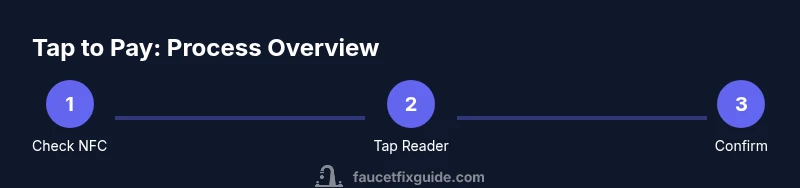
In practice, the payment flow is simple: wake or unlock your phone, bring it close to the reader, confirm the payment if prompted, and await the confirmation—often a beep or visual cue. You don’t need to open the wallet app in advance, though some terminals work best when the app is ready or the phone is unlocked. If the terminal requires authentication for larger amounts, you’ll see a prompt to authorize the payment using biometrics or a PIN. The reader communicates with the wallet via a tokenized credential, so sensitive card numbers aren’t shared. This overview provides context for the later, detailed steps.
Security and privacy considerations
Tap to pay on Android relies on tokenization and dynamic cryptograms. Your card number is never transmitted; instead, a one-time code is used for each transaction. The NFC exchange is short-range and encrypted, which adds a layer of security. Device-level protections—screen lock, biometric unlock, and app permissions—further reduce risk if your phone is lost or stolen. It’s wise to keep your phone updated and to review wallet app permissions periodically. The Faucet Fix Guide team emphasizes using trusted wallets and keeping recovery options up to date.
Troubleshooting common issues
If tap to pay isn’t working, start with the basics: verify NFC is enabled in Settings, ensure the wallet app is installed and set as the default, and confirm you have at least one active card in the wallet. Some readers require you to unlock the phone or reactivate the screen. If a terminal fails to read your device, try removing it from the reader’s range and re-tapping, or update the wallet app. Inconsistent behavior may indicate a regional limitation, a software bug, or a need to re-add payment cards.
Real-world usage and tips
Once you’ve set up tap to pay, you’ll find it convenient for everyday errands—from grocery runs to transit payments. Practice at low-stakes merchants to get comfortable with the timing and be mindful of the reader’s signal. Some merchants display prompts like ‘Tap to pay: Visa, Mastercard’ to confirm compatibility. For travelers, keep a backup payment method in case a reader is incompatible or offline. The Faucet Fix Guide team suggests testing at least one transaction per card in your wallet to confirm reliability and understanding of prompts.
Tools & Materials
- Android smartphone with NFC(NFC enabled in Settings; check with your device manufacturer for exact steps)
- Google Wallet or another compatible wallet app(Set as default for tap-to-pay if possible)
- At least one active payment method in your wallet(Card added by issuer; may require verification in-app)
- Stable internet connection (optional for some wallets)(Most transactions work offline after credential provisioning, but updates require connectivity)
- Merchant terminal with contactless reader(Not required for personal setup, but needed to test in real-world scenarios)
Steps
Estimated time: 5-15 minutes
- 1
Check device compatibility
Verify that your Android phone supports NFC and that you have a compatible wallet installed. Open Settings > Connections > NFC to confirm NFC is on. If you’re unsure, consult your device manufacturer’s support page or your wallet’s help center.
Tip: If NFC isn’t visible in Settings, your phone may require a software update or a hardware limitation. - 2
Prepare your wallet and cards
Open Google Wallet or your chosen app and ensure at least one card is active. If needed, add a new card, complete verification, and set the app as the default for tap-to-pay in your wallet’s settings.
Tip: Add a backup card in case one card isn’t accepted by a merchant. - 3
Wake and unlock your phone
Before approaching the reader, wake the screen or unlock your device. A locked screen can sometimes block the wallet from transmitting credentials.
Tip: Keep your phone close but not touching the reader; focus on the area where the reader’s beacon is strongest. - 4
Tap near the reader
Hold the back of your phone near the contactless symbol on the reader. Wait for a beep, vibration, or on-screen confirmation indicating the payment was accepted.
Tip: If nothing happens, try repositioning the device slightly higher or lower and re-attempt. - 5
Authenticate if prompted
Some transactions may require biometric or PIN authentication for larger amounts or depending on merchant settings. Complete the prompt to authorize the payment.
Tip: If you’re using a biometric sensor, ensure your finger/face is recognized by the system before tapping again. - 6
Confirm and save the receipt
Check the confirmation on the terminal or your wallet app. Many receipts are digital; you can opt to receive a notification or email receipt if offered.
Tip: If you don’t receive a confirmation, try tapping again at a different point on the reader or use another card method.
Frequently Asked Questions
Is tap to pay secure on Android?
Yes. Tap to pay uses tokenization and dynamic cryptograms, so your real card number is never transmitted. Your device protection (lock screen, biometrics) adds another layer of security.
Tap to pay is secure because it uses tokenization and device security features like facial recognition or a fingerprint to authorize payments.
Which Android wallets support tap to pay?
Most major wallets on Android support tap to pay, including Google Wallet and other bank-issued wallets. Availability can vary by country and bank.
Most wallets on Android, like Google Wallet, support tap to pay, though availability varies by country and issuer.
Do I need to unlock my phone to pay?
In many cases yes. Unlocking or waking the device ensures the wallet can transmit credentials. Some terminals allow payment without unlocking for small amounts, depending on policy.
Usually you’ll need to unlock or wake the phone to pay, but some small purchases may work without full unlock depending on the merchant.
Can I use tap to pay if the merchant doesn’t have a contactless reader?
No. Tap to pay requires a merchant with a contactless reader. If the reader isn’t active, use another payment method or try again later.
If the merchant doesn't have a contactless reader, you won't be able to pay with tap to pay there.
What should I do if tap to pay isn’t working?
First, ensure NFC is on and your wallet is updated. Check that a card is active in the wallet and try a re-tap. If problems persist, contact your bank or wallet support.
If it isn’t working, check NFC, update the wallet, make sure a card is active, and try again. If needed, contact support.
Are there limits on tap to pay transactions?
Some regions set limits or authentication requirements for contactless payments. Larger orders may prompt for additional verification.
Some places have limits; larger purchases may require extra verification.
Watch Video
Top Takeaways
- Unlock phone and wake the screen before tapping
- NFC and a supported wallet are essential
- Tokenization keeps card numbers private
- Test payments at various merchants to confirm reliability