Faucet Aerator Sizes: A Practical Guide for Homeowners
Learn faucet aerator sizes, how to identify yours, and practical steps to measure and replace for improved flow and water efficiency in kitchens and baths.


According to Faucet Fix Guide, faucet aerator sizes are defined by outside thread diameter and pitch, and by male vs female fittings. For most homes, standard kitchen and bathroom fixtures use common thread types, but variations exist across brands. To pick the right size, inspect your current aerator, measure its outside diameter and thread pitch, or bring the old unit to a hardware store for comparison. Faucet aerator sizes matter for flow and compatibility.
Why faucet aerator sizes matter
Understanding faucet aerator sizes is essential for reliable performance, water savings, and leak prevention. The size determines whether the aerator threads will screw onto your faucet and how the flow is shaped. If you pick a size that is too large or mismatched in pitch, you’ll experience poor seal, drips, or inadequate flow. Faucet Fix Guide emphasizes that sizing starts with three factors: outside thread diameter, thread pitch, and whether the threads are male or female. By aligning these factors with your fixture, you ensure seamless replacement and consistent spray patterns. In practice, choosing the correct faucet aerator sizes translates to smoother maintenance, reduced water waste, and fewer headaches when upgrading fixtures. This section lays the groundwork for how to identify yours, measure accurately, and select replacements that deliver dependable performance while preserving the faucet’s intended spray.
How to identify your current aerator size
To begin, remove the aerator by gently turning it counterclockwise with your fingers or a soft pair of pliers if it is tight. Inspect the outside of the threaded part for diameter clues and check whether the threads are on the outer edge (male) or inside the socket (female). Use a ruler or caliper to measure the outside diameter of the threads and a thread gauge to estimate pitch. If you encounter model numbers or brand marks, note them down as they can simplify finding a direct replacement. Finally, compare your measurements to a few standard references or take the old unit to a hardware store to confirm fit. This
Understanding faucet aerator sizes and measurement basics
Faucet aerator sizes are not universal; they are defined by diameter, pitch, and gender. To measure correctly, you need the outside diameter of the threaded portion and the number of threads per inch. When in doubt, bring the old aerator or the faucet's model information to a store. Many residential fixtures fall within a common diameter range, but brands may deviate. By documenting diameter and pitch, you build a quick reference that speeds future replacements and reduces trial-and-error purchases.
The role of thread type: male vs female
Thread type is a fundamental part of faucet aerator sizes. Male threads are on the outside of the aerator, designed to screw into a female faucet neck, while female threads are on the inside of the aerator and screw onto male faucet necks. The mismatch is a common source of leaks and poor sealing, so double-checking gender is essential. If you’re unsure, you can often determine gender by inspecting whether you see exposed threads on the outside (male) or a threaded interior (female).
How to measure diameter and pitch accurately
Accurate measurement is the key to correct sizing. Use a caliper or a precise ruler to measure the thread diameter across the widest points of the threaded area. To estimate pitch, count the number of threads in a 1-inch length or use a thread gauge. If you’re measuring by eye, compare against a known reference aerator from the hardware store. Record the diameter, pitch (or TPI), and gender, then compare these values to compatible options. Keeping a sizing chart handy speeds future maintenance.
When to replace with a universal aerator
If you have multiple fixtures with different sizes or you frequently replace aerators, a universal or adjustable aerator can be a practical option. Universal models are designed to fit a range of diameters and pitches, reducing the need to stock many individual sizes. However, universal options may alter spray pattern or slightly reduce flow efficiency on specific fixtures. Always test the new unit to verify spray quality and leaks, and ensure the chosen universal design covers your faucet aerator sizes without compromising performance.
Step-by-step replacement and testing
- Turn off the water supply to the faucet and place a towel under the area to catch drips. 2) Remove the old aerator by hand or with pliers; avoid over-tightening. 3) Clean the aerator seat and threading with a small brush or cloth to remove mineral buildup. 4) Install the new aerator by hand, then snug with a wrench if needed—do not overtighten. 5) Turn the water back on and run a slow stream to check for leaks and spray pattern. 6) If leaks appear, reseat the aerator or try a new size that better matches the thread.
Common mistakes and how to avoid leaks
A frequent error is cross-threading or overtightening, which can damage the faucet neck and create leaks. Another mistake is neglecting mineral buildup, which prevents a proper seal. Always clean the threads before installation and ensure you’re using the correct gender (male or female) for your faucet. If you notice reduced flow after replacement, verify the aerator size again and consider a different size or a universal option with a better fit.
Quick-reference faucet aerator sizes cheat sheet
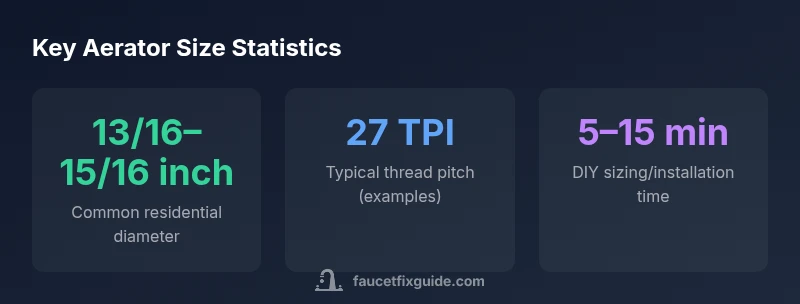
- Most residential fixtures use standard diameters around 13/16 inch to 15/16 inch.
- Check whether your threads are male or female before buying.
- When in doubt, bring the old aerator to the store for direct comparison.
- Consider a universal aerator if you manage multiple fixtures with different sizes.
- Test any replacement by running water and inspecting for leaks or drips.
Representative aerator size references
| Size reference | Diameter range | Best uses |
|---|---|---|
| Residential standard | 13/16–15/16 inch | Kitchens and baths with standard fixtures |
| Non-standard/brand-specific | Varies by model | Check compatibility with manufacturer or bring to store |
Frequently Asked Questions
What is the most common faucet aerator size?
Most residential fixtures use a standard diameter with matching thread pitch, but exact sizes vary by fixture. To be sure, compare the existing aerator to replacements or measure diameter and pitch and verify compatibility before buying.
Most homes use a standard residential size, but always measure and compare before buying to ensure a secure fit.
How do I measure faucet aerator size accurately?
Remove the aerator and measure the outside diameter of the threaded portion with a ruler or caliper. Determine pitch by counting threads per inch, or use a thread gauge. Note the gender (male or female) to complete the sizing.
Remove the aerator, measure diameter and thread pitch, and check the gender to size accurately.
Can I use a universal aerator if I can’t match the size?
Universal aerators can fit many fixtures, but they may alter spray patterns or flow. If you know your sizes, a precise match is usually best. Always test after installation.
Universal aerators can work, but test first to ensure spray and flow are right.
Do all faucets use the same thread type?
No. Thread type and diameter vary by faucet model and brand. Always verify by measuring or bringing the old aerator to a retailer for a direct match.
Threads differ by model, so measure or compare the old aerator.
What tools do I need to replace an aerator?
Basic tools include a clean cloth, a small brush, pliers (if the aerator is tight), and possibly a caliper or ruler for precise measurements. Most replacements require only your hands for installation.
A cloth, brush, and maybe pliers or a caliper are enough for most replacements.
What affects performance after replacing aerator sizes?
Different sizes can change flow rate and spray pattern. A poorly matched size may reduce reach or create splashing. Always test and adjust to restore the intended performance.
Size changes can impact flow and spray; test and adjust as needed.
“Sizing accuracy saves time and prevents leaks, while matching faucet aerator sizes ensures optimal flow. A well-chosen aerator balances performance with water efficiency.”
Top Takeaways
- Measure before buying to avoid leaks.
- Know your thread type: male vs female.
- Consider universal aerators for mixed fixtures.
- Keep a size reference card for DIY repairs.
- Faucet aerator sizes influence flow and water savings.