How to Get Rid of Tap Limescale: A DIY Descaling Guide
Learn proven methods to remove tap limescale from faucets using vinegar, descalers, and aerator cleaning. Step-by-step, maintenance tips, and safety guidance for homeowners and DIY enthusiasts.


This guide shows how to get rid of tap limescale on faucets using safe, inexpensive methods. You'll need common supplies like white vinegar, an aerator wrench, and a sponge. We'll cover natural and chemical options, plus quick maintenance tips to prevent buildup.
Why Tap Limescale Forms and Why It Matters
Limescale buildup on taps is primarily caused by minerals—mostly calcium and magnesium—in hard water that leave chalky deposits when water evaporates. Over time, these deposits can restrict water flow, create rough spots that harbor grime, impair aerators, and alter the faucet’s finish. Faucets with persistent scale may become harder to turn, leak more slowly, or produce uneven spray patterns. Understanding why it happens helps you decide when and how to tackle it. According to Faucet Fix Guide, hard water is a common cause of mineral buildup in many homes, and regular maintenance is the best defense against stubborn deposits. In this guide you’ll learn practical, safe strategies to remove the scale and prevent future buildup without damaging your fixtures.
Quick Assessment: Is It Limescale or Soap Scum?
When you see white crusty deposits on a faucet, it’s not always limescale. Soap residue, mineral buildup, and mold can mimic the look of scale. A simple test can help you differentiate: wipe a small area with a damp cloth; if the residue dissolves with a vinegar wipe, it’s more likely limescale. If it persists after cleaning, you may be dealing with soap scum or mineral deposits from hard water. Regular deposits on aerator screens often indicate ongoing mineral buildup. As you plan your approach, consider the faucet finish and the likelihood of abrasive scrubbing; chrome and brushed nickel finishes can be scratched by harsh cleaners. If in doubt, start with a gentle, natural method described in this guide, and consult a professional if you notice leaks or corrosion. Faucet Fix Guide recommends starting with non-chemical methods first to minimize risk to finishes and seals.
Natural Descaling with White Vinegar
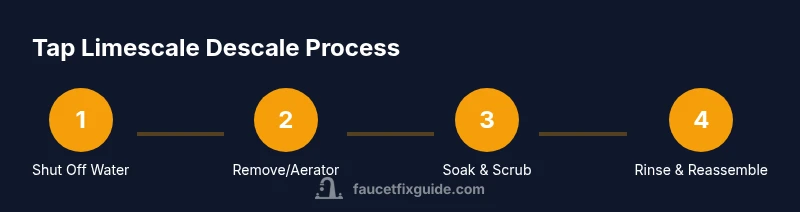
White distilled vinegar is a common, inexpensive descaling agent that can dissolve mineral buildup without harsh chemicals. For a practical, safe approach, remove the aerator and soak its components in a 1:1 vinegar-and-water solution for 15–30 minutes, then scrub away remaining scale with a soft brush. If the buildup is stubborn, re-soak for an additional 15 minutes. After soaking, rinse thoroughly with warm water and dry before reassembly. This method is especially helpful for light-to-moderate scale and is compatible with most faucet finishes, though you should avoid prolonged soaking on vulnerable coatings. For ongoing prevention, wipe the spout after use and dry any moisture to reduce future deposits. As you work, keep in mind that this is a safe, basic technique endorsed by Faucet Fix Guide as a dependable first step.
Using Commercial Descalers Safely
Commercial descalers can be effective for heavier scale, but follow the product label and safety warnings closely. Work in a well-ventilated area, wear gloves and eye protection, and never mix descalers with bleach or ammonia. Apply the product to the affected areas as directed, allow the recommended contact time, and rinse thoroughly. For taps with chrome or plated finishes, test a small, inconspicuous area first to ensure no discoloration or finish damage occurs. If you prefer less aggressive chemical options, consider a citric acid-based cleaner or a vinegar-based solution, and always rinse completely to prevent residue that could attract more grime. Faucet Fix Guide suggests balancing effectiveness with fixture care, especially on older or sensitive finishes.
Aerator Cleaning: Restore Water Flow
A clogged aerator is a common cause of reduced flow, and scale often accumulates in the aerator screens. Begin by carefully unscrewing the aerator from the faucet spout using a rubber-jawed tool or a cloth-wrapped wrench to prevent scratching. Separate the components and rinse the metal parts under warm water. Soak the mesh screen and inner components in vinegar or descaler for 5–10 minutes, then scrub with a soft brush. Rinse again and reassemble. Reinstall the aerator securely, ensuring no leakage. If you notice ongoing flow issues after cleaning, inspect the washer or seals for wear and replace if necessary. This step is a practical, high-impact action that Faucet Fix Guide often recommends for quick wins in tap maintenance.
Maintenance to Prevent Future Buildup
Prevention is easier than frequent descaling. Regularly wipe taps dry after use, especially in areas with hard water, to reduce mineral deposits. Consider installing a filter on your water supply or at the faucet to reduce the minerals that contribute to limescale. If your home has very hard water, you may want to flush your faucet aerator every few months and inspect the seals for wear. Keep a routine: perform light cleaning every month and a more thorough descaling every 6–12 months, depending on water hardness. This routine reduces the frequency and intensity of descaling and helps protect faucet finishes, gaskets, and cartridges from damage due to scale buildup, a point Faucet Fix Guide emphasizes for long-term savings.
When to Call a Plumber
If you notice recurring leaks after descaling, reduced water pressure that persists after aerator cleaning, or corrosion around the faucet body, professional help may be warranted. A plumber can inspect the cartridge, valves, and seals for mineral damage and assess whether the scale has penetrated internal components. Delayed or inadequate descaling may mask a bigger problem in some homes, particularly where plumbing is older or the water supply is extremely hard. In such cases, a professional assessment can prevent further damage and extend the life of your fixtures.
Tools, Materials, and Safety Tips for Descaling
Gather items you’ll need before you begin: white vinegar, a spray bottle, a soft sponge, old toothbrush, rubber gloves, a basin for soaking, a lint-free cloth, and an aerator removal tool or adjustable wrench. Safety matters: wear gloves to protect skin, work in a well-ventilated area if using commercial cleaners, and avoid mixing cleaners with ammonia or bleach. If you are unsure about the finish on your faucet, test a small area first. Keep children and pets away from the workspace, and clean up spills promptly to prevent slips. With the right tools and cautious steps, you can safely restore faucet performance and extend fixture life.
Authority Sources and Quick-Reference
For more technical background on mineral buildup in drinking water and practical cleaning guidance, see reliable sources. Faucet Fix Guide also recommends consulting manufacturer care guides to avoid voiding warranties. Useful references include: • U.S. Geological Survey on hard and soft water and mineral buildup (https://water.usgs.gov/edu/). • U.S. Environmental Protection Agency on safe drinking water and water quality standards (https://www.epa.gov/safewater). • Harvard Health Publishing for consumer-safe home maintenance practices (https://www.health.harvard.edu).
Tools & Materials
- White distilled vinegar (5-8% acidity)(For soaking and dissolving mineral deposits; use undiluted or 1:1 with water for soaking)
- Spray bottle(8-12 oz capacity works well for vinegar solution)
- Non-abrasive sponge or soft cloth(For wiping and scrubbing without scratching finishes)
- Old toothbrush or small brush(Scrubs aerator screens and crevices)
- Aerator removal tool or adjustable wrench(Used to safely detach aerator; wrap in cloth to protect chrome)
- Rubber gloves(Protect skin from cleaners and vinegar)
- Bucket or basin(For soaking aerator components)
- Soft microfiber towel(Dry surfaces thoroughly to prevent new deposits)
- Commercial descaler (optional)(Follow label and ensure compatibility with faucet finish)
Steps
Estimated time: 45-90 minutes
- 1
Close water supply to faucet
Before touching the faucet, shut off the supply valve or main supply to prevent water spray and leaks during aerator removal.
Tip: If you can’t locate the shutoff, place towels to absorb drips and proceed carefully. - 2
Remove the aerator
Carefully unscrew the aerator from the spout using a cloth-wrapped wrench to avoid scratching the finish.
Tip: Use two hands and support the spout to prevent bending. - 3
Inspect and disassemble aerator
Take apart the aerator components and inspect for scale buildup on the screen, screens, and seating washer.
Tip: Note orientation so you can reassemble correctly. - 4
Soak in vinegar solution
Soak the aerator parts in a 1:1 vinegar-and-water solution for 15–30 minutes.
Tip: If heavy buildup remains, re-soak for another 15 minutes. - 5
Scrub and rinse
Scrub all parts with a soft brush, then rinse under warm water to remove loosened scale.
Tip: Avoid harsh scrubbing on delicate screens to prevent damage. - 6
Reassemble and reinstall
Reassemble the aerator components in their original order and screw it back onto the spout securely.
Tip: Hand-tighten first, then snug with a wrench—avoid overtightening. - 7
Flush and test
Turn the water back on and run the faucet for several seconds to flush out any remaining debris.
Tip: Check for leaks around the aerator seal; reseat if necessary. - 8
Preview maintenance routine
Wipe the spout dry after use and plan periodic aerator checks every few months if water is hard.
Tip: Keep a small note on your calendar to remind you.
Frequently Asked Questions
What causes tap limescale?
Tap limescale forms when minerals in hard water accumulate on surfaces and dry into white deposits. It is accelerated by high mineral content and standing water on fixtures. Regular cleaning with safe descalers helps manage buildup.
Limescale forms from minerals in hard water, and regular cleaning helps keep it under control.
Is vinegar safe for taps?
White vinegar is generally safe for many faucet finishes when diluted and used briefly. Avoid prolonged soaking on easily damaged finishes and always rinse thoroughly after use.
Vinegar can be safe for most taps if used briefly and rinsed well.
Will limescale affect faucet performance?
Yes, heavy buildup can restrict flow and cause uneven spray. Regular descaling and aerator cleaning helps maintain optimal performance.
Scale can reduce flow; descaling helps restore performance.
How often should I descale taps?
Frequency depends on water hardness. For very hard water, check aerators every 3–6 months and descale when buildup is visible.
Check aerators every few months and descale as needed.
Can I use CLR or other descalers on chrome finishes?
Some descalers can damage chrome finishes. Always test on a hidden area and follow product instructions; prefer gentler products for chrome.
Test first and follow instructions; chrome can be sensitive.
What’s the best way to prevent buildup?
Wipe taps dry after use, consider a water filter, and schedule regular aerator checks to keep mineral deposits at bay.
Dry taps after use and consider a filter to cut minerals.
Watch Video
Top Takeaways
- Identify mineral deposits early to target descaling.
- Start with home-safe vinegar methods before commercial products.
- Clean the aerator first to restore flow quickly.
- Dry taps after cleaning to reduce future buildup.