What Size Faucet for Bar Sink: A Sizing Guide
Learn how to choose the right faucet size for your bar sink, including height, reach, and hole-spacing guidance to ensure a clean, functional install.


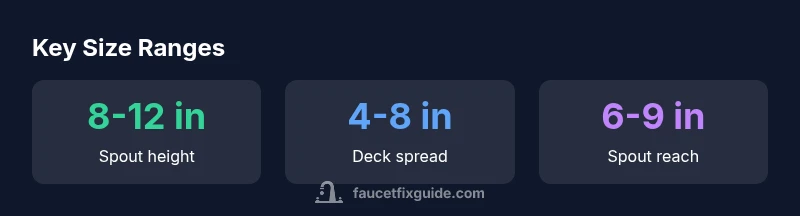
For most bar sinks, a faucet with a 4- to 8-inch center-to-center spread and a spout height of 8 to 12 inches fits common setups. A 6-inch spread with a 9–10 inch spout is a versatile starting point; always measure your sink and cabinet clearance before buying.
Why the right size matters for bar sinks
According to Faucet Fix Guide, bar sinks benefit from properly sized faucets for usability and water efficiency. A faucet that is too tall or too short, too far or too close, or mounted with awkward center spacing can create splashes, reduce reach, and complicate routine tasks like filling shakers or rinsing glassware. Bar setups often live under compact cabinets and behind tight backsplashes, so choosing the right size is not a luxury—it's part of safety, cleanliness, and comfort. This section explains how height, reach, and hole spacing affect everyday use, and what to measure before you buy.
In practice, the size you choose directly affects how easily you can complete popular bar tasks, from rinsing lemons to filling tall cocktail shakers. A slightly larger spout allows you to reach all corners of a wide bar sink, while a compact setup keeps the area tidy and reduces splashes when you’re not aiming carefully. The goal is a balanced configuration that minimizes splash, maximizes clearance, and fits your cabinet geometry.
Key dimensions to know: height, reach, and spread
Three core dimensions govern bar-faucet fit: spout height (how high the water exits), spout reach (how far the water lands from the faucet center), and deck spread or center-to-center distance (hole spacing). For most bar sinks, a higher spout reduces splashing when glasses are tall, while a longer reach improves access to the basin. Spreads commonly range from 4 to 8 inches, with 6 inches being a particularly versatile standard. If your sink is shallow or your cabinet depth is tight, you may want a shorter reach and lower spout. Faucet manufacturers typically publish these specs, so always compare your sink measurements to the product data.
Measuring your bar sink: a step-by-step guide
Start with the sink width and depth; this helps determine the needed clearance behind the faucet and whether a gooseneck design is practical. Next, measure from the center of the sink's left edge to the center of its right edge to determine the required hole spacing (the spread). Then check your cabinet or backsplash clearance to ensure a tall spout won’t collide with overhead features. Finally, inspect existing holes or mounting plates—if you’re replacing an old faucet, you may need to adapt the deck thickness or install a new mounting bracket. Write down all measurements and carry the manufacturer data sheets when shopping.
Common faucet configurations for bar sinks
Bar sinks frequently use three main mounting configurations: 4-inch center-to-center (single or dual-hole), 6-inch centers (widespread), and 8-inch centers for wider basins or double-bowl bars. For some high-traffic setups, wall-mounted or deck-mounted tall goosenecks are popular because they minimize splashing and keep the faucet away from the glass rack above. If you’re upgrading from a basic single-hole faucet, consider a widespread option because it provides more flexibility to position the spout over the main basin and away from the edge.
Height vs reach: tradeoffs and practical tips
A taller spout (8–12 inches) helps with tall glassware and filling pitchers, but it can cast more splash when you’re careful with motion. A shorter, more compact spout keeps the work surface clear but may limit space for oversized items. When bar tasks include rinsing large mugs or filling cocktail shakers, a balanced height around 9–10 inches with a medium reach (6–9 inches) is often ideal. If you frequently operate behind a bar or under a cabinet lip, a gooseneck design with a moderate reach may offer the best compromise.
Installation considerations: mounting, clearance, and backsplash
Before purchasing, confirm your mounting type matches your sink and cabinet. Ensure the deck thickness supports the faucet’s mounting hardware and that screws won’t strike a splash guard or the underside of the sink. If your bar area has a shallow backsplash, choose a faucet with a shorter spout and compact handle clearance. Remember to check the supply lines for any height constraints and standard compression fittings; upgrading to flexible hoses can simplify installation when space is tight.
Selecting the right spout: gooseneck vs rigid
Gooseneck spouts offer generous reach and height, which is helpful for bar tasks, yet they can be bulkier and heavier. Rigid or compact spouts save space and reduce splashing but may limit access to a deep basin. For most bar setups, a mid-height gooseneck (9–10 inches) with a moderate reach (6–9 inches) is a solid middle ground. If you’re replacing a faucet with a matching hole pattern, verify the mounting hardware and gasket sizes align with the sink's design.
How to compare products: reading specs and diagrams
Review the product spec sheet rather than relying on photos alone. Focus on center-to-center measurement, required hole size, spout height, reach, and the mounting style. If possible, view the diagrams showing the faucet in a 90-degree angle to get a sense of spacing. Look for compact handles with ergonomic grips and check if the cartridge is serviceable. Warranty length and replacement parts availability are practical considerations too.
Quick sizing checklist before you buy
Create a simple checklist: measure sink width (for reach and clearance), measure hole spacing (spread), verify cabinet/back-splash clearance for tall spouts, decide gooseneck vs rigid, choose a mounting type compatible with your sink, and check that the product spec matches your measured values. Carry your measurements and the sink/deck thickness when shopping, and compare multiple products to ensure the live fit under your bar counter.
Sizing options by bar sink setup
| Bar Sink Setup | Center-to-Center Spread | Recommended Spout Height | Notes |
|---|---|---|---|
| Small bar sink | 4 inches | 8-10 inches | Best for compact bars and tight backsplashes |
| Medium bar sink | 6 inches | 9-11 inches | Balanced option for most setups |
| Large bar sink | 8 inches | 10-12 inches | Allows tall glassware and bigger pitchers |
Frequently Asked Questions
What size faucet fits a standard bar sink?
Most bar sinks accommodate 4-8 inch center-to-center mounts with a spout height around 8-12 inches. Start with a 6-inch spread and test in your space; adjust if you have unusual measurements.
For many bar sinks, a 6-inch spread with a tall gooseneck works well; measure your sink to confirm.
How do I measure center-to-center spacing on my bar sink?
Measure from the center of one mounting hole to the center of the opposite hole. If you have multiple holes, note the closest pairing, or use a measuring tape to confirm the most practical placement for your chosen faucet.
Measure from hole center to hole center; pick the pair that aligns with your faucet base.
Can I replace a kitchen faucet with a bar-sink faucet?
Yes, if the mounting holes, deck thickness, and clearance match the bar sink installation. You may need an adaptor or different mounting kit to fit the bar setup.
Yes, but check the holes and deck first and you might need adapters.
Which is better for a bar sink: single-hole or widespread faucets?
Widespread faucets offer more placement flexibility on bar sinks with limited deck space, while single-hole fixtures save space and simplify installation. Choose based on hole spacing and your reach requirements.
Widspread is more flexible if you have space; single-hole is simpler.
Do I need a high-arc gooseneck for bar use?
A high-arc gooseneck helps with tall glasses and pitchers, but isn’t required for all setups. If you regularly fill tall items or need clearance, a taller spout is advantageous.
A tall gooseneck helps with tall glasses if you place it right.
“Sizing a bar sink faucet isn’t about a single number; it’s about matching the sink width, the operator’s reach, and available clearance to minimize splashes and maximize usability.”
Top Takeaways
- Measure first, then match the faucet
- Aim for a 6-inch spread as a versatile baseline
- Check clearance behind and above the bar
- Verify mounting type and hole spacing before buying