Faucet and Fixtures: A Practical Comparison for Homeowners
An analytical, side-by-side evaluation of budget chrome versus premium brushed-nickel faucet and fixtures, focusing on cost, durability, water efficiency, maintenance, and installation for homeowners and DIYers.


Two main paths for faucet and fixtures are a budget chrome faucet setup with basic fixtures versus a premium brushed-nickel option with water-saving features. For most homeowners, the best choice balances reliability, cost, and maintenance needs. According to Faucet Fix Guide, the right combination hinges on your budget, usage, and installation context, not just aesthetics.
Overview of faucet and fixtures choices
Choosing a faucet and fixtures involves balancing function, style, and long-term reliability across kitchens and bathrooms. When homeowners evaluate faucet and fixtures, they look at how a unit integrates with existing plumbing, the finish that resists wear, and how maintenance will fit into daily routines. For many households, the choice is not merely cosmetic—it's a long-term decision that affects water use, ease of repair, and resale value. In this guide we compare two representative paths: a budget chrome faucet setup with standard fixtures, and a premium brushed-nickel system with water-saving features. The aim is to help you understand practical trade-offs, so you can decide based on real-world usage, not just appearance. Faucet Fix Guide emphasizes clarity: the goal is predictable performance, straightforward maintenance, and a clean install that suits your home.
What to consider before you buy
Before purchasing, define the room context (kitchen vs bathroom), expected wear, and maintenance preferences. Consider the faucet handle type (single-handle vs dual-handle), the number of mounting holes required, and compatibility with your sink or basin. Finish durability matters: chrome finishes are affordable and easy to touch up, while brushed-nickel and matte black finishes hide fingerprints better but may require special cleaners. Water-saving features—such as aerators and flow restrictors—can lower utility bills and simplify compliance with local codes. In addition to the fixture’s core mechanism, evaluate warranty terms, availability of replacement cartridges, and the ease of finding spare parts locally. By mapping out these criteria, you reduce post-purchase regret and create a cohesive look with existing faucet and fixtures.
Option A: Budget Chrome Setup
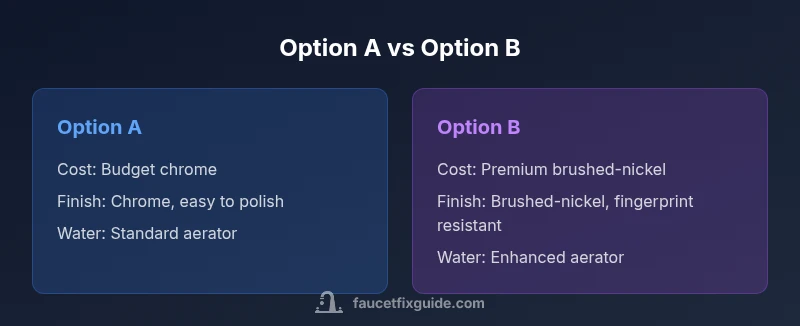
Option A represents a practical, cost-conscious path for homeowners who want reliable operation without premium finishes. A budget chrome faucet paired with basic fixtures tends to have the lowest upfront price and widely available parts. Maintenance tends to be straightforward, with standard cartridge kits and common aerator replacements. In many homes, this setup delivers satisfactory performance for everyday tasks, as long as the installation is compatible with existing supply lines. However, the chrome finish may show wear over time and may require periodic polishing. The key trade-off is longevity versus short-term affordability, especially in high-use kitchens or busy bathrooms where frequent use increases wear on the finish and seals.
Option B: Premium brushed-nickel System
Option B targets durability, aesthetics, and long-term efficiency through a premium brushed-nickel system with integrated water-saving features. This path often includes high-quality ceramic cartridges, better corrosion resistance, and finishes that resist fingerprints. The upfront cost is higher, but improved reliability and lower maintenance costs can offset higher prices over the life of the product. Expect enhanced design options that blend with other brushed-nickel fixtures and appliances, yielding a cohesive look. Installation may require careful alignment with sink holes and supply lines, and you may need professional help for a flawless finish. A key advantage is improved resale appeal in homes where buyers value premium hardware and water efficiency.
Water efficiency and aerator technology
Water efficiency hinges on the faucet’s aerator, flow rate, and cartridge design. Modern aerators can reduce flow without sacrificing performance, especially in kitchen tasks that involve filling pots or rinsing dishes. A premium system often ships with adjustable flow or built-in shut-off features, which save water and support local conservation goals. Budget setups may rely on standard aerators with fixed flow rates, which are adequate for basic use but may lack the fine-tuning options of higher-end fixtures. When evaluating, check the rated gallons per minute (GPM) or liters per minute (LPM) and confirm compatibility with your plumbing. Regular checks on aerator cleanliness also prevent reduced pressure and ensure consistent performance.
Durability, materials, and finishes
Durability depends on the core cartridge, seals, and the finish’s resilience to corrosion and wear. Chrome is inexpensive and easy to re-polish; brushed-nickel provides more hiding power for fingerprints and scratches but may require gentler cleaners. Ceramic cartridges last longer than older rubber seals and can reduce leak frequency. The finish choice influences cleaning frequency and cleaning methods; harsh chemicals can degrade certain coatings. For households with hard water, select fixtures with corrosion-resistant materials and consider periodic cartridge replacement as part of routine maintenance. A well-chosen faucet and fixtures pair balances cost with long-term resilience.
Installation complexity and compatibility
How you install matters as much as what you buy. Budget chrome sets often fit standard 3/8 inch supply lines and typical sink holes, making DIY installation feasible for many homeowners. Premium systems may require precise hole alignment, mounting hardware, and sometimes a professional plumber to ensure a leak-free seal and proper aerator seating. Verify faucet dimensions, clearance behind the sink, and compatibility with your vessel or countertop. If you are replacing old fixtures, assess potential valve compatibility and the need for new supply lines or shut-off valves. A careful measurement plan reduces return visits and frustration.
Maintenance, cleaning, and long-term care
Maintenance should be straightforward regardless of price tier. Regular wipe-downs prevent mineral buildup, and occasional cartridge checks keep performance consistent. Chrome finishes respond well to mild cleansers, while brushed-nickel finishes benefit from non-abrasive cleaners formulated for mixed metal surfaces. For aerators, remove and rinse at intervals to maintain flow. Document replacement parts and keep a small toolkit on hand for simple repairs. With a maintenance mindset, even budget fixtures can perform reliably for many years, whereas premium systems tend to demand less frequent upkeep due to higher-quality components.
Aesthetics, design coherence, and resale value
Furniture-like consistency in finishes across kitchen and bathroom improves perceived value. Brushed-nickel or matte finishes coordinate with stainless appliances and other fixtures, contributing to a cohesive interior design. Chrome remains timeless and versatile, which helps in quick turnover scenarios. Consider the overall style of the room, lighting, and faucet actuation style (single-handle vs dual-handle) to determine whether the finish will age well in your environment. While aesthetics are important, most buyers also care about durability and water efficiency when evaluating long-term value.
Budgeting and total cost of ownership without hard numbers
Total cost of ownership includes upfront price, installation, maintenance, and potential replacement parts. A budget chrome setup typically provides the lowest upfront cost and broader availability of affordable cartridges. Premium brushed-nickel fixtures carry higher initial costs but usually offer longer service life and better resistance to wear. When budgeting, account for possible professional installation fees, extended warranties, and the cost of upgrading matching fixtures (sinks, appliances) for a cohesive look. This holistic view helps determine long-term value rather than relying on sticker price alone.
Practical buying tips and product life cycle
Create a simple decision matrix that weighs price, durability, water efficiency, and aesthetics. Use reputable brands and verify stock availability for replacement parts. Look for certified cartridges and eco-friendly finishes that resist tarnish and corrosion. If you plan to move soon, consider a finish that appeals to a broad audience while maintaining resilience. Understanding the product life cycle—and how often repair parts are needed—helps you plan for upgrades and avoids early disposal.
Maintenance routines and seasonal checks
Set a seasonal maintenance schedule to inspect seals, cartridges, and aerators. In hard water areas, consider a yearly scale removal or filter upgrade to protect finish and performance. Document the installation and keep purchase receipts in a home maintenance binder. Regularly check for leaks around the base and handle, and replace worn seals promptly. A consistent maintenance plan reduces the likelihood of major failures and preserves the faucet and fixtures’ value.
Comparison
| Feature | Option A: Budget Chrome Setup | Option B: Premium Brushed-Nickel System |
|---|---|---|
| Cost range | $100-$200 | $350-$700 |
| Durability | Moderate wear risk over time | High durability and finish resilience |
| Water efficiency | Standard flow with basic aerator | Enhanced efficiency with adjustable flow |
| Maintenance | Frequent polishing; cartridge replacements typical | Lower maintenance; longer cartridge life |
| Aesthetics & finish | Versatile chrome option | Premium brushed-nickel finish |
| Installation complexity | DIY-friendly on standard setups | Often requires professional installation |
| Warranty & support | Brand varies by model; standard coverage | Generally longer warranty and better support from premium brands |
The Good
- Lower upfront cost and broad availability
- Straightforward maintenance with common parts
- Wide compatibility with sinks and accessories
- Timeless finish that fits most interiors
What's Bad
- Higher long-term wear risk for chrome finishes
- Lower water-saving capability without upgrades
- Fewer design options in premium finishes
Option B generally offers better long-term value and aesthetics, though Option A remains preferable for tight budgets.
Premium brushed-nickel fixtures deliver durability and water-saving advantages that pay off over time. Chrome setups win on upfront cost and accessibility, making them sensible for budget-driven projects.
Frequently Asked Questions
What is the best faucet finish for durability?
Durability depends on finish and materials; brushed-nickel often resists scratches and fingerprints better than chrome, while ceramic cartridges offer long-lasting performance. Consider hard-water exposure and cleaning methods when choosing.
Brushed-nickel is typically more durable for fingerprints and scratches; pair it with a good cartridge for longevity.
Are water-saving fixtures worth the extra upfront cost?
Water-saving fixtures reduce flow without compromising performance, which can lower utility bills over time. They also align with many local codes and conservation goals. Weigh upfront costs against expected usage and climate.
Yes, if you value long-term savings and code compliance.
Can I install premium fixtures myself or should I hire a pro?
DIY installation is possible for many chrome and basic chrome setups, but premium fixtures often require precise alignment and a leak-free seal. If in doubt, hiring a licensed plumber ensures a professional finish.
DIY is possible for simple installs, but premium fixtures benefit from a pro.
How do I choose the right aerator for my faucet?
Check the fixture’s compatibility with standard aerators, note the flow rating (GPM or LPM), and select an adjustable flow option if you want more control. Clean aerators periodically to maintain performance.
Match aerator type to your flow needs and faucet design.
What maintenance schedule is recommended for chrome vs brushed-nickel finishes?
Chrome finishes respond to mild cleaners and regular polishing; brushed-nickel benefits from non-abrasive cleaners and periodic checks of seals and cartridges. Establish a seasonal routine to keep both looking and functioning well.
Keep both finishes clean with mild cleaners and check seals seasonally.
Do I need special tools to replace cartridges or seals?
Most replacements use common household tools, but some premium designs may require specific cartridges or manufacturer tools. Always consult the installation guide and keep spare parts on hand.
Usually simple tools, but check the manual for specialty parts.
Top Takeaways
- Set a clear budget and weigh total ownership costs
- Prioritize water-saving features for long-term savings
- Choose a finish that matches existing fixtures for cohesion
- Expect installation complexity to influence total project time