Faucet Adapter for Portable Dishwasher: Installation and Tips
Learn how to select, install, and maintain a faucet adapter for portable dishwashers. This educational guide covers compatibility, safety, and troubleshooting for DIY homeowners and renters.


By installing a compatible faucet adapter, you can run a portable dishwasher from most standard kitchen faucets without permanent plumbing. This quick guide explains how to verify fit, choose the right adapter size (female/male threads), install safely, and test for leaks. You’ll learn common compatibility issues and troubleshooting tips for reliable operation.
What a faucet adapter does and why you might need one
A faucet adapter is a small connector that converts your faucet’s threading to a compatible inlet for portable appliances like a countertop dishwasher. According to Faucet Fix Guide, using an adapter avoids permanent plumbing changes while letting you quickly move between uses. If your portable dishwasher hose ends in a standard hose connector, the adapter provides the male or female thread the hose expects. Compatibility is mostly about thread size (commonly 3/4 inch) and the diameter of the faucet aerator. In practice, most households can link a portable dishwasher to their sink with a simple add-on, saving time and reducing clutter. Before buying, measure your faucet’s thread pitch and check the dishwasher’s hose diameter. Also consider water flow: a tight fit that restricts flow can reduce washing performance. If you share water with a sprayer or side spray, choose a model that fits both outlets or use a dual-connector setup. While adapters are inexpensive, quality matters: a poorly sealed adapter can leak, causing water damage or mold growth over time. The Faucet Fix Guide team recommends choosing a brass or corrosion-resistant plastic adapter with a secure washer and gasket to ensure a leak-free seal.
Compatibility essentials: thread sizes, hose diameters, and inlet types
Understanding compatibility is the first step. Most portable dishwashers ship with hoses that end in a standard coupling, but the faucet side may vary by thread size and the presence of an aerator. The most common household threads are 3/4-inch male and female, but some faucets use 1/2-inch threads or nonstandard sizes. Start by removing the aerator from the faucet for a clean measurement, then use a caliper or ruler to note the thread diameter and pitch. If you see a thread sealant or tape, document it for reassembly. Check the dishwasher hose: does it terminate in a compression fitting or a typical garden-hose connector? Some adapters bridge both worlds with a dual-thread design, while others require two separate adapters. Always read the adapter’s instruction sheet to confirm which threads it supports and whether it accounts for faucet aerator removal. Finally, ensure your water supply line can handle the dishwasher’s demand—rarely an issue at low throughput, but a high-volume fill can cause pressure fluctuations in older homes.
Choosing the right adapter: materials, seals, and durability
The right adapter combines a good material, solid seals, and a compact profile. Look for brass or engineered plastics with corrosion resistance and a robust washer; these resist mineral buildup and leaks over time. Check the gasket material and the presence of a secondary seal or O-ring to improve reliability. Decide between male-to-female, female-to-male, or dual-thread adapters based on your dishwasher hose and faucet type. If your faucet has a built-in sprayer or diverter, verify that the adapter does not interfere with other outlets. Finally, consider warranty terms and product reviews that highlight long-term durability and leak resistance. A well-made adapter reduces the risk of drips and mold in the cabinet beneath your sink while preserving water efficiency.
Common installation challenges and how to avoid them
Pipelines and threads can be deceptive; the most common mistakes involve mismatched threads and over-tightening. Always confirm thread size and pitch before purchasing, and test with a small amount of water before running a full cycle. Empty the sink area and place towels to catch any accidental drips during testing. If the hose has an inner liner, ensure it is not kinked during installation. When in doubt, start with a simple, low-flow test and gradually increase to a full dishwasher cycle. In some cases, you may need a second adapter to accommodate dual outlets or a different hose end. The Faucet Fix Guide analysis shows that leaks typically stem from incorrect sealing or overtightening, not from the adapter itself.
Testing, maintenance, and safe use after installation
After installation, run the dishwasher on a quick cycle to check for leaks at both ends. If you see moisture, tighten the connection a quarter-turn and recheck. Use a dry cloth to wipe away any residue and inspect washers for wear. Periodically inspect the adapter and hose for mineral buildup or cracks, especially in hard-water areas. If your dishwasher requires frequent reseating, consider replacing worn washers or upgrading to a higher-quality adapter. Always turn off hot water at the tap when you’re done and store hoses neatly to prevent damage. By following these practices, you’ll keep your setup reliable and safe.
Quick compatibility checklist
- Faucet thread type matches adapter (common: 3/4 in)
- Hose diameter aligns with adapter inlet
- Gasket or washer is present and undamaged
- No kinks or sharp bends in the hose
- No signs of leaks after a test run
Tools & Materials
- Faucet adapter (3/4 in standard threads)(Check thread type (male/female) and compatibility with your dishwasher hose)
- Teflon tape or thread sealant(Use sparingly to ensure a clean seal without residue)
- Dishwasher hose washer/gasket(Ensure there is a fresh washer for a leak-free seal)
- Adjustable wrench or pliers(Used to snug connections without overtightening)
- Bucket or towels(Catch drips during testing and cleanup)
- Safety gloves(Protect hands during installation)
Steps
Estimated time: 25-40 minutes
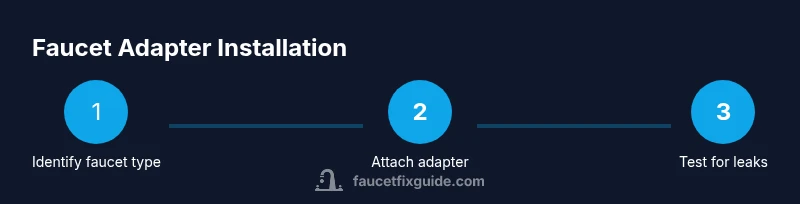
- 1
Identify faucet type
Examine the faucet at the sink to determine thread size and whether an aerator is present. If the aerator is removable, take note of its size and the underlying thread. This step ensures you choose an adapter that fits securely without damaging the faucet.
Tip: Take photos of the faucet threads before removing any parts. - 2
Select the correct adapter type
Choose an adapter that matches your faucet thread size and your dishwasher hose. Decide between a straight adapter or a dual-thread model if needed for compatibility with other outlets. Confirm that the gasket and washer are included and in good condition.
Tip: Prefer brass or high-quality plastic with a durable gasket for longevity. - 3
Prepare the faucet and hose
Clean the faucet outlet and inspect the dishwasher hose end for damage. If you removed an aerator, clean the threads and apply a small amount of thread sealant or plumber’s tape as recommended by the adapter manufacturer.
Tip: Keep towels handy to manage any residue from sealant. - 4
Attach the adapter to the faucet
Screw the adapter onto the faucet by hand to avoid cross-threading, then snug with a wrench. Ensure the gasket sits flat and there are no gaps that could allow leaks.
Tip: Do not overtighten; hand-tight plus a quarter-turn with a wrench is often sufficient. - 5
Connect the dishwasher hose and seal
Attach the dishwasher hose to the adapter and install the washer if included. Check that the connection is snug and aligned to prevent twisting or kinking as the dishwasher moves during use.
Tip: If you feel resistance when threading, back off and re-align rather than forcing the connection. - 6
Test for leaks and flow
Run a short wash cycle with the water on low to observe the connections. Look for drips at both ends, and re-tighten as needed in small increments. Once leak-free, run a full cycle to confirm consistent water flow.
Tip: If leaks persist, disassemble and re-seal with fresh washers or consider a different adapter size.
Frequently Asked Questions
Do I need to remove the faucet aerator when using a faucet adapter for portable dishwasher?
Not always, but many adapters require removing the aerator to reveal the correct threads. If your adapter is designed to fit over the aerator threads, you can keep it in place. Always follow the adapter’s instructions and reinsert any aerator if required after testing.
You may need to remove the aerator to access the threads, but check the adapter directions first.
Will using an adapter reduce water pressure or flow to the dishwasher?
A properly installed adapter should not noticeably reduce water pressure. If you notice weak flow, inspect for kinks, leaks, or a partial blockage in the hose, and confirm the adapter provides a clear path for water.
If the flow seems lower, check the hose and seals for obstructions and re-tighten connections.
Can I use a dishwasher hose with a different end on a pull-down faucet?
Yes, with the right adapter that matches both the faucet outlet and the dishwasher hose end. If your faucet has a pull-down sprayer, ensure the adapter does not obstruct its operation and that you can still reset the sprayer.
You’ll need an adapter that matches both ends, and make sure it doesn't stop your faucet’s sprayer.
What should I do if there is a persistent leak after installation?
First, power off the water supply and re-check all seals and washers. Re-tighten in small increments and replace worn gaskets. If leaks continue, consider replacing the adapter or consulting a professional plumber.
Shut off the water, recheck seals, and if leaks stay, replace parts or seek help.
Are there safety concerns mixing DIY adapters with portable dishwashers?
Use adapters from reputable brands and avoid makeshift solutions. Ensure the setup remains dry, avoid hot water on sensitive fittings, and never operate while the connections are wet.
Stick to certified adapters and keep the area dry while using the setup.
How do I maintain the adapter to prevent leaks over time?
Regularly inspect washers, replace worn seals, and clean mineral buildup from threads. Re-tighten connections gently during routine checks to maintain a reliable seal.
Check seals and clean the threads every few months to prevent leaks.
Watch Video
Top Takeaways
- Verify thread size and hose compatibility before buying
- Use a quality adapter with a solid gasket to prevent leaks
- Test connections with a short cycle before full use
- Keep the area dry and inspect for wear regularly