Why Faucet Over Stove: A Practical Comparison Guide
Analytical side-by-side: why faucet upgrades often outperform stove upgrades in kitchen remodels, focusing on water efficiency, cost, maintenance, and long-term ROI for homeowners and renters.


Why faucet over stove? For most kitchen renovations, faucet upgrades deliver faster, tangible value. They reduce water waste, improve daily tasks, and lower maintenance costs, with a shorter payback than many stove-focused improvements. This comparison clarifies where faucet investments pay off for typical homes.
Why the question matters: why faucet over stove in remodeling decisions
In many kitchens, homeowners and renters ask why faucet over stove emerges as a priority during budgeting. The question—why faucet over stove—captures a practical truth: faucets influence daily usability far more often than large stove upgrades, especially when water efficiency and reliability matter. A well-chosen faucet can reduce hot-water waste, improve ergonomics, and lower ongoing maintenance costs. In 2026, widespread WaterSense standards encourage modern fixtures to save water without sacrificing performance. This section outlines how faucet-focused improvements compare with stove-focused upgrades in terms of cost, disruption, and long-term value. By examining use cases, you’ll see why faucet investment is frequently the smarter choice for households seeking consistent returns on a kitchen refresh.
Core functions and lifecycle: faucet vs stove at a glance
A faucet offers controllable water delivery, temperature, and flow with relatively quick swaps and simpler installations. A stove provides heat, ignition reliability, and cooking performance, with higher risk and longer payback when upgrading. Lifespans differ too: fixtures often last 10–15 years with periodic cartridge replacements, while stoves can last 15–25 years but may incur bigger upfront costs and more complex service needs. When you compare total cost of ownership, faucet upgrades typically yield lower upfront investment and faster returns through water savings, reduced utility bills, and improved daily comfort. This section emphasizes how usage patterns—daily handwashing, dish prep, filling pots—drive value toward faucets in many households, especially those with renters or tight remodeling budgets.
Cost and value: tangible numbers and payback ranges
Without getting lost in gear-specific minutiae, it helps to anchor the discussion with ballpark ranges. Faucet upgrades commonly fall in the low to mid-hundreds of dollars, often including installation if you hire a pro. Stove upgrades tend to sit higher, commonly ranging from the mid-hundreds to the low thousands depending on model, fuel type, and installation needs. In terms of payback, faucet improvements often deliver quicker returns through water savings and usability gains, while stove upgrades may offer longer-term value tied to cooking performance and energy efficiency. For renters and homeowners prioritizing daily comfort and utility savings, faucet investments frequently outpace stove-focused enhancements on a cost-per-benefit basis.
Real-world scenarios: renters, small kitchens, energy-focused homes
Consider a rental with a tight budget and frequent water usage: upgrading the faucet can noticeably reduce water waste and improve tenant satisfaction with minimal disruption. In small kitchens where counter space and workflow matter, a high-quality faucet with a pull-down sprayer can streamline meal prep and cleanup without altering cabinet layouts. For energy-conscious homes, choices like aerator upgrades or flow-restrictive cartridges can cut water heating energy use with negligible impact on daily tasks. These scenarios illustrate how faucet-focused improvements often align with common needs, delivering practical value where stove upgrades may not: daily usability and cost containment.
Installation considerations and maintenance
Faucet installation is generally quicker and less invasive than stove installation, especially if the existing plumbing is in good shape. Most DIY-friendly faucet swaps can be completed in a few hours with basic tools, while professional installation ensures proper shutoffs, pressure balance, and seal integrity. Maintenance for modern faucets is typically straightforward: periodic cartridge replacements, aerator cleaning, and inspecting supply hoses for wear. Stoves, by contrast, involve more complex venting, electrical or gas connections, and potentially larger service calls. Factoring in maintenance frequency and parts availability helps clarify why faucet upgrades often deliver more consistent long-term value for a broad range of homes.
Planning a remodel: steps for prioritizing fixtures
A practical planning approach starts with a needs assessment: how do you use the kitchen day to day? Next, quantify benefits: estimate water savings, ease of use, and potential friction points in cleanup. Then map out a phased budget: prioritizing a faucet upgrade in a first phase can unlock immediate value, followed by stove improvements if the cooking performance remains a priority. Finally, engage pros for plumbing and appliance electrical or gas work, and ensure you align with local codes and WaterSense guidelines. A clear plan reduces risk and helps you optimize the mix of upgrades to maximize ROI.
Myths and misperceptions
Common myths include: faucets cannot meaningfully impact energy use, or stoves deliver the only meaningful kitchen upgrade. In reality, modern faucets with efficient aerators and flow control can reduce hot-water use and household consumption, while well-chosen stoves address cooking performance and energy efficiency. Another misconception is that all upgrades require major renovations; many improvements are simple swaps that minimize downtime. Debunking these myths helps homeowners focus on where the strongest value lives: daily usability, reliability, and water and energy efficiency.
Long-term ROI and lifecycle considerations
The long-term value of faucet-focused upgrades often lies in lower ongoing costs, easier maintenance, and faster payback. Faucets typically require periodic cartridge or aerator replacements, which are inexpensive and quick to perform. Stoves can deliver strong value over 15–25 years if you value cooking performance or energy efficiency, but the upfront cost and complexity are higher. When you weigh total cost of ownership, faucet investments tend to offer a lower per-year cost and more predictable maintenance, particularly for households that prioritize daily workflows and utility savings. For many homes, this translates to a higher overall sense of improvement per dollar spent over the first few remodel cycles.
Authority sources and further reading
- For water efficiency standards, see EPA WaterSense: https://www.epa.gov/watersense/
- For energy considerations in appliances, visit the U.S. Department of Energy: https://www.energy.gov/
- For consumer guidance on appliance upgrades, refer to major publications like Consumer Reports: https://www.consumerreports.org/
These sources provide additional context on water-saving fixtures, appliance efficiency, and practical upgrade strategies that align with best practices in 2026.
Comparison
| Feature | Faucet Upgrade | Stove Upgrade |
|---|---|---|
| Primary Function | Improved water delivery and efficiency | Cooking performance and energy use |
| Cost Range | $120-$600 | $400-$1500 |
| Maintenance | Low-to-moderate (cartridges/aerators) | Moderate (burners, cleaning, venting) |
| Install Time | 2-4 hours (typical swap) | 3-6 hours (depends on gas/electric work) |
| Best For | Water savings and daily usability | Cooking performance and kitchen value |
The Good
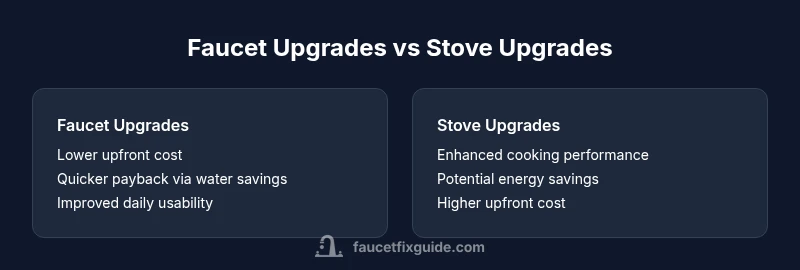
- Lower upfront cost compared with many stove upgrades
- Faster payback through water savings and usability gains
- Quicker, simpler installations with fewer code hurdles
- Improves daily routine and aesthetics with minimal disruption
- Helpful for renters or short renovation timelines
What's Bad
- Faucet upgrades have limited impact on overall cooking performance
- Stove upgrades can yield larger energy savings and culinary advantages
- Some faucet upgrades require periodic maintenance (cartridges, aerators)
- High-end faucets may not dramatically alter home resale value if other issues exist
Faucet upgrades generally provide better short- to mid-term value for most homes, while stove upgrades matter more when cooking performance and total energy savings are priorities.
Prioritize faucet improvements for daily usability and water savings, especially in rentals and smaller kitchens. Reserve stove upgrades for homes where culinary performance or longer-term energy efficiency justifies the higher upfront cost.
Frequently Asked Questions
What is the main factor when deciding faucet upgrades versus stove upgrades?
The primary factor is daily impact: faucets influence water use and routine comfort, while stoves affect cooking performance and energy use. Consider budget, tenant needs, and how you use the kitchen.
The main factor is how you use the kitchen daily. Faucets affect water use and comfort; stoves affect cooking performance and energy use.
Are faucet upgrades necessary for water-saving features?
Not always, but many faucet upgrades enable lower flow rates, efficient aerators, and better temperature control, which reduce water heating energy and waste.
Yes, many faucet upgrades enable water-saving features like efficient aerators that cut waste.
Do stove upgrades increase home resale value as much as faucet upgrades?
Stove upgrades can boost appeal for buyers who prioritize cooking performance, while faucet upgrades improve daily usability. The impact depends on buyer priorities and overall kitchen condition.
Stove upgrades can boost cooking appeal; faucets boost daily usability. It depends on what buyers care about.
How long does installation usually take for faucets vs stoves?
Faucet installs typically take a few hours, especially when plumbing is straightforward. Stove installs vary from a few hours to a full day if gas lines or venting are involved.
Faucet installs are usually a few hours; stove installs can take longer if gas and venting are involved.
What maintenance is involved after faucet upgrades?
Expect periodic cartridge or aerator replacement, occasional hose checks, and cleaning of mineral buildup to maintain performance.
You’ll do occasional cartridge changes and aerator cleaning to keep it flowing well.
Can most of these upgrades be DIY, or should I hire a pro?
Basic faucet swaps are doable for many homeowners, but stove upgrades, especially with gas or electrical work, typically require a licensed professional.
Basic faucet swaps can be DIY; stove upgrades usually need a pro, especially if gas or wiring is involved.
Top Takeaways
- Prioritize faucet upgrades for rapid payoff and daily usability
- Consider stove upgrades when cooking performance and long-term energy savings matter
- Factor in installation complexity and maintenance needs
- Use a phased remodel approach to balance costs and benefits
- Consult WaterSense and energy guidance to maximize ROI