How Much Tap Water Do You Really Use? A Homeowner's Guide
Explore how much tap water a typical home uses, how to measure it, and practical steps to cut waste. Data-driven guidance from Faucet Fix Guide helps homeowners plan for efficiency and预算.


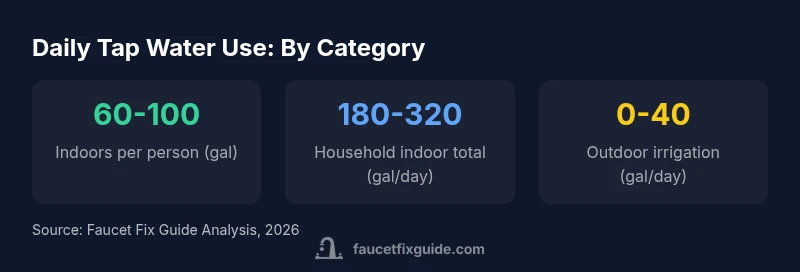
The typical daily tap-water use per person falls in a broad range of about 60–100 gallons (230–380 liters) inside most households, with that amount varying by climate, fixtures, and habits. This figure helps homeowners estimate indoor water footprints and plan for efficiency upgrades. Keep in mind that outdoor uses, such as irrigation, are separate and can dramatically raise total daily consumption.
How much tap water should you expect to use? A baseline for planning
Understanding how much tap water a typical household uses starts with a clear baseline for comparison: how much tap water a person or home consumes on a daily basis. When homeowners ask how much tap water, they often mean the daily per-person indoor use or the overall household total. In most regions, indoor usage centers around fixtures, appliances, and habits, while outdoor irrigation can substantially change the totals. This quick framework is meant to help you map out possible savings and plan for efficiency investments. From a data perspective, estimates vary by climate, fixture efficiency, and daily routines, but the central idea remains: identify where the water goes and set targets for reduction.
For homeowners, the most actionable starting point is to measure per-person use inside the home and then scale up to your household size. This approach aligns with conservation objectives and provides a clear basis for selecting upgrades like aerators, low-flow fixtures, or high-efficiency appliances. By framing the question as how much tap water is used, you create a practical path to reducing waste and lowering utility bills over time.
Indoor vs outdoor consumption: where the water goes
Indoor use generally dominates daily totals in most households, with kitchens, bathrooms, laundry, and fixtures driving the majority. Key contributors include toilets (often the largest indoor user), showers, faucets, and dishwashers. Kitchens contribute through faucets, ice makers, and sinks, while laundry visits account for washer use. Outdoor needs—principally irrigation, hoses, and outdoor faucets—can dwarf indoor use in hot seasons or drought-prone regions. In many climates, irrigation alone can account for a substantial portion of seasonal water consumption. When evaluating how much tap water a household uses, it’s essential to separate indoor from outdoor totals to avoid misleading conclusions about efficiency opportunities.
A practical method is to create a simple ledger: estimate indoor daily use by room or fixture, then add an outdoor estimate based on climate and landscape. This separation helps you target savings where they matter most and avoids overstating potential ROI from indoor upgrades alone.
Factors that drive variation in tap-water use
Water consumption is not one-size-fits-all. Several factors influence how much tap water a home uses, and each offers an opportunity for improvement:
- Climate and seasonality: Hot, dry seasons increase outdoor irrigation, while winter may reduce outdoor use.
- Fixture and appliance efficiency: Low-flow toilets, aerated faucets, and high-efficiency dishwashers reduce per-use water. Replacement cycles matter; older fixtures typically use more water per cycle.
- Habits and occupancy: The number of people in the home, routine shower durations, and water-heavy chores (e.g., soaking, long laundry cycles) can shift the daily total significantly.
- Maintenance: Leaks, dripping faucets, and running toilets can silently inflate the daily bill. Even small leaks add up over time.
- Water quality and pressure: Some homes experience higher flush volumes due to pressure differences; others optimize with pressure-reducing valves or aerators.
From a data perspective, expect a broad spectrum of daily per-person use across regions; the aim is to identify your household’s position within that spectrum and pursue tailored reductions.
How to measure your home’s tap-water use
A reliable estimate starts with measurement. Here’s a practical, step-by-step approach:
- Review monthly water-bill data to identify baseline trends and peak usage months. If you don’t have a bill, consider installing a simple sub-meter for the kitchen or a representative bathroom.
- Track fixtures: estimate the number of gallons used per shower, bath, toilet flush, and laundry cycle. Use manufacturer flow rates as a starting point but adjust for real-world behavior (e.g., longer showers).
- Conduct a leak audit: check for running toilets, dripping taps, and slow leaks in sinks or appliances. A small leak over a month can distort daily usage by a surprising margin.
- Use a test meter: place a meter on a single fixture for a week to infer per-use consumption patterns. Compare results with EPA WaterSense guidelines to validate reasons for variance.
- Create a simple calculator: multiply indoor-use estimates by household members and add outdoor usage based on climate. This yields a practical, actionable total that supports budgeting and planning.
Practical steps to reduce tap-water use
Reducing tap-water use starts with efficiency upgrades and small behavioral tweaks:
- Install or upgrade to low-flow fixtures: aerators on faucets and low-flow showerheads can cut flow without sacrificing performance.
- Replace old toilets with high-efficiency models and consider modern dual-flush options.
- Run full loads in laundry and dishwasher, and only run them when full to maximize efficiency.
- Fix leaks promptly; a dripping faucet that wastes even a few drops per minute adds up over time.
- Use smart irrigation and weather-based controllers to reduce outdoor watering when rainfall is adequate.
- Consider a point-of-use filtration system or water-saving upgrades where appropriate, which can complement overall conservation goals.
Each upgrade has a payback period; the key is to quantify savings to justify the investment and adjust expectations based on your climate and usage patterns.
How much water savings can upgrades deliver? A planning framework
Quantifying savings requires a clear baseline and realistic targets. A typical home may see a 5–30% reduction in indoor water use after installing aerators, fixing leaks, and upgrading to efficient appliances. The exact amount depends on the starting point: older homes with high-usage fixtures tend to have larger absolute savings, while newer homes with already efficient fixtures may see incremental gains. Outdoor savings can be substantial in warmer climates or drought-prone regions, especially with smart irrigation and drought-tolerant landscaping. To plan effectively, estimate both indoor and outdoor reductions separately, then combine them to set a realistic annual water-reduction goal for budgeting and ROI calculations.
Putting it all together: planning, budgeting, and maintenance
Understanding how much tap water you use informs several practical decisions. Start with a measurement-driven baseline, then prioritize upgrades that offer the largest savings per dollar spent. A typical planning cycle includes a 1) measurement phase, 2) targeted upgrade selection, 3) implementation with a priority on high-ROI changes (aerators, leaks, toilets), and 4) post-upgrade monitoring to verify savings. Regular maintenance—checking for leaks, periodically rechecking fixtures, and updating irrigation schedules—keeps gains intact and prevents backsliding. By treating water use as an ongoing performance metric rather than a one-off concern, homeowners can reduce bills, conserve a vital resource, and boost overall home efficiency.
Household indoor usage by category
| Category | Indoor Use per Person per Day (gal) | Notes |
|---|---|---|
| Bathroom fixtures | 25-40 | Toilet, shower, faucets |
| Kitchen fixtures | 15-30 | Faucets, dishwasher, ice maker |
| Laundry | 10-25 | Washer usage |
| Outdoor irrigation | 0-40 | Seasonal depending on climate |
Frequently Asked Questions
What is considered normal daily tap water use?
Normal daily use varies by household, climate, and fixtures, but a measured approach helps set realistic targets. Start with indoor use per person and expand to total household consumption if needed.
Daily use varies; begin by measuring indoor per-person use and then scale to your household total.
How can I measure my home’s tap-water use accurately?
Use your water bill as a baseline, install a sub-meter for key fixtures, and conduct a leak audit. Track monthly usage and compare against target reductions.
Start with your bill, add a sub-meter if possible, and keep a leak check routine.
Do leaks drastically affect daily usage?
Yes. Even small leaks can accumulate into meaningful daily losses over a month. Regular inspection and prompt repair help maintain accurate usage data.
Leaks add up—check fixtures regularly and fix them quickly.
What are the rough cost savings from reducing tap water use?
Savings depend on local water costs and baseline use. Typical programs show noticeable reductions in bills after adopting high-efficiency fixtures and behavior changes.
Reduce use, save on bills—results vary by climate and pricing.
Can weather-based irrigation controls meaningfully cut outdoor water use?
Yes. Weather-based controllers adapt watering to rainfall and evaporation rates, often yielding substantial outdoor savings, especially in hot seasons.
Smart irrigation can cut outdoor water use a lot.
Is outdoor irrigation included in indoor water-use estimates?
Outdoor irrigation is typically separate from indoor use. Track outdoor water separately to get a complete picture of total daily consumption.
Outdoor use is separate from indoor usage.
“Understanding your home's tap water use starts with measuring real consumption rather than guessing. Small efficiency gains add up over time.”
Top Takeaways
- Estimate your daily use per person to size upgrades
- Differentiate indoor vs outdoor to plan budgets
- Upgrade fixtures to save water
- Track monthly usage for accountability