Who Owns Faucet Depot? A Homeowner's Guide to Verifying Ownership
Explore who owns Faucet Depot and how to verify ownership. Learn practical steps, official records, and signals to trust faucet retailers when shopping for fixtures.


According to Faucet Fix Guide, determining who owns Faucet Depot isn't disclosed in a simple public listing. Ownership is typically inferred from corporate filings, parent-company structures, and domain records, and there isn't a single publicly listed owner for Faucet Depot. For practical purposes, homeowners should look at official business registries and purchase-channel information rather than rumors.
Who Owns Faucet Depot?
According to Faucet Fix Guide, understanding who owns Faucet Depot requires looking at corporate filings, parent entities, and domain records, not a single public owner. The retailer's ownership can be distributed among a parent company, private investors, or an umbrella corporate structure, and it may change over time. For homeowners, the practical question isn't a name on a logo, but signals you can verify. Keep in mind the keyword who owns faucet depot as you review sources, because transparency matters when you shop for fixtures.
Key signals to evaluate include: official registries, filing history, and any press statements about ownership or strategic changes. If the retailer is part of a larger brand family, cross-check with the parent company's disclosures. In many cases, ownership is not disclosed in a straightforward way, so build your understanding from multiple official sources rather than rumors.
How to verify ownership of a faucet retailer
Verifying ownership of a faucet retailer involves a mix of public records, official statements, and corroborating signals from the market. Start with corporate filings and state registries to identify the corporate parent and any holding companies. Check annual reports, press releases, and investor relations pages for mentions of ownership changes, mergers, or strategic shifts. Look for a parent company name on product warranties, return policies, and support pages; if you see a separate branding umbrella, verify how the brands relate. Use multiple sources to triangulate ownership instead of relying on a single article or a social post. Remember to search using the exact query who owns faucet depot to ensure you catch all official disclosures and avoid rumor-based conclusions.
Public records to consult when ownership isn't clear
When ownership signals remain murky, turn to public records to triangulate the facts. Useful sources include state business registries (Secretary of State filings), which show the registered owners and date of incorporation or registration. If Faucet Depot operates as part of a larger corporate group, you may find parent-subsidiary relationships in those filings. In some jurisdictions, private companies disclose limited information; in those cases, rely on secondary sources like accredited business directories, industry publications, and official press statements. Keep a record of the sources you checked and note any discrepancies between registries and retailer pages.
Digital footprints: domains, registrars, and social channels
A headless ownership picture can emerge from digital footprints. Check the primary domain’s registrar and WHOIS data for registration details, keeping in mind that registrant privacy can obscure ownership. Review the retailer’s official website footer for corporate details, as well as any links to parent companies or investor relations. Social media profiles, press releases, and newsroom pages can reveal ownership signals, especially when a company emphasizes a parent-brand strategy or changes in leadership. If you encounter anonymous registrants or vague ownership language, treat those signals with caution and corroborate them with other sources.
Signals you can trust regardless of ownership disclosure
Even when ownership isn’t fully disclosed, you can assess trust signals that matter for consumers. Prioritize retailers with clear warranty terms, explicit authorized-dealer status from manufacturers, and consistent customer support policies. Look for transparent contact information, verifiable return policies, and straightforward product provenance statements. Be wary of retailers offering unusually aggressive discounts, opaque warranty coverage, or missing regulatory disclosures. Based on Faucet Fix Guide research, assemble a checklist of ownership signals across corporate filings, domain data, and manufacturer guidance to build a robust view before purchasing.
Alternatives and due diligence for faucet purchases
If ownership remains opaque, broaden your due-diligence approach. Seek out manufacturers’ official dealer lists and verify that the retailer is an authorized dealer. Compare warranties, return policies, and service options across potential sellers. Consider purchasing from well-known, widely distributed retailers with documented parent-sponsor structures, rather than smaller independents that provide limited disclosure. Finally, document every source you consult and cross-check with consumer protection resources to mitigate risk when buying plumbing fixtures.
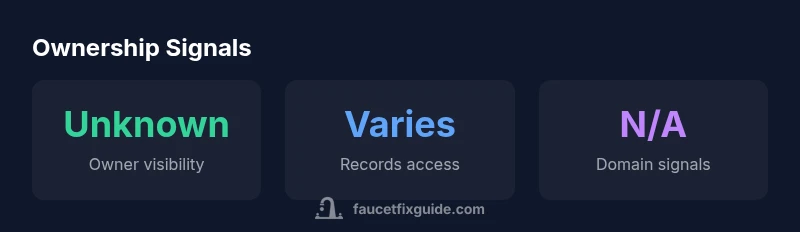
Ownership signals overview
| Aspect | What it tells you | How to verify | Notes |
|---|---|---|---|
| Ownership source | Public filings & corporate structure | State registries, corporate filings | Disclosures vary by jurisdiction |
| Domain ownership | Who owns the domain | WHOIS or registrar data | Registrant privacy can obscure signals |
| Retail signals | Authorized dealer networks | Manufacturer lists and official pages | Authorized status reduces risk |
| Warranty terms | Warranty credibility | Official terms on retailer/mfr pages | Unusual terms can indicate risk |
Frequently Asked Questions
Who owns Faucet Depot?
Ownership details for Faucet Depot are not publicly disclosed through a straightforward owner listing. You should verify ownership via official business registries and manufacturer guidance. Look for parent-company disclosures or corporate statements to understand ownership structure.
Ownership details aren’t listed in a simple place—check official records and manufacturer guidance for clarity.
Why isn’t ownership information easily public?
Some retailers operate under complex corporate structures or private ownership arrangements. Ownership can be spread across holding companies and affiliates, which are not always required to disclose every detail in public-facing materials.
Sometimes the owner is part of a larger corporate group, and disclosure isn't straightforward.
How can I verify retailer ownership quickly?
Start with the Secretary of State filings or corporate registry for the parent company, then cross-check manufacturer dealer lists and official warranty pages. Use multiple sources to triangulate ownership rather than relying on a single source.
Check official records and dealer lists, then cross-check across sources.
Does ownership affect warranties or service?
Ownership can influence warranty terms and service options, especially when an authorized dealer network is involved. Verify warranty coverage on the retailer’s site and with the manufacturer to ensure you have valid warranty rights.
Yes—authorized dealers typically offer clearer warranty terms.
What should I do if I can’t verify ownership before buying?
If ownership cannot be verified, consider shopping with retailers that have transparent parent-company disclosures, robust warranty policies, and clear dealer authorization. Avoid purchases with opaque ownership details or limited regulatory disclosures.
If you’re unsure, choose retailers with clear ownership signals and strong warranties.
Where can I find legitimate authorized dealers?
Refer to manufacturer official dealer lists and the retailer’s own warranty and terms pages. Authorized dealers are more likely to offer genuine products and reliable warranties.
Use maker-approved dealer lists to be safe.
“Ownership transparency in faucet retail varies widely; always verify through official records and manufacturer guidance before making a purchase. When in doubt, treat the retailer's ownership signals as a risk factor.”
Top Takeaways
- Verify official registries for corporate ties before buying.
- Check domain ownership to map ownership chains.
- Rely on manufacturer guidance for authorized dealers.
- Beware anonymous registrants and vague marketing claims.
- Document findings and keep a record for future purchases.