What Size Faucet for Vessel Sink: A Practical Guide
Learn how to size a faucet for a vessel sink with height, reach, and clearance guidance. This analytical guide helps homeowners and DIYers pick a faucet that fits your vessel sink and vanity.


Answer: For vessel sinks, aim for a taller faucet with adequate reach so the water stream lands inside the basin. A practical rule of thumb is a total height around 7-12 inches and a spout reach of 4-7 inches, with the faucet clear of the rim by about 1 inch. According to Faucet Fix Guide, always measure your sink opening and countertop before buying.
Choosing the Right Vessel Sink Faucet Size
Vessel sinks introduce a distinctive geometry to the bathroom vanity. Because the basin sits on the countertop rather than being inset, the faucet must clear the rim and deliver water into a deep bowl without splashing. The size you choose affects usability, splash patterns, and overall aesthetics. In practice, sizing should be guided by the sink diameter, rim height, and the user’s typical reach. Start with a tall, well-proportioned faucet, then adjust based on how your hands and the water stream align with the basin opening. This alignment reduces splash and makes daily tasks like brushing teeth or washing hands more comfortable.
Key sizing terms: height, reach, clearance
Understanding three core terms makes sizing easier: height, reach, and clearance. Height refers to the faucet's total vertical size from base to spout end, which determines whether water clears the vessel rim. Reach is how far the spout extends horizontally from the faucet body, affecting where the stream lands relative to the basin center. Clearance describes the space between the faucet and the sink area, including countertop overhang and cabinet doors. When you know these definitions, you can compare faucet specs quickly and avoid under- or overhang that leads to splashing or cramped use.
Measure your sink and vanity before buying
Accurate measurements prevent buyer remorse after installation. Start by measuring the vessel bowl diameter and rim height above the countertop. Then check your vanity depth and any backsplash that could interfere with a tall faucet. Next, measure available deck space and the distance to the wall or backsplash to ensure you can mount a single-hole or widespread faucet without crowding. Finally, write down a target range for height and reach, and bring your measurements when shopping or consulting with a plumber.
Typical size ranges and what they mean
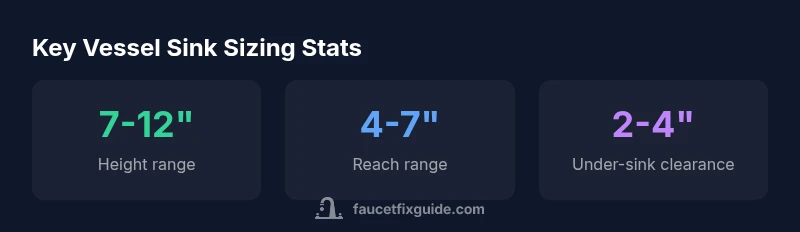
There is no universal factory standard for vessel sink faucets, but several practical ranges work well in most bathrooms. Typical total faucet height tends to fall in the 7 to 12 inch band, with taller options reserved for large vessel bowls or high countertops. Spout reach usually falls between 4 and 7 inches, which helps direct the water toward the basin center without splashing over the rim. If you have a particularly large or small sink, you may need to adjust these numbers slightly to preserve balance and ease of use.
How faucet height affects usability and splash
Water splashing is often a sign that the faucet height is too low for the vessel, or the reach places the stream too close to the edge. A taller faucet creates a deeper arch and a longer vertical throw, which preserves splashing margins. However, excessively tall or ornate models can look awkward on small countertops. The sweet spot tends to be a height that comfortably clears the rim while keeping the water stream centered in the basin. Test with a mock setup if possible before final installation.
Spout reach and basin coverage: why it matters
Spout reach determines where the water stream lands relative to the vessel bowl. Too short a reach, and you’ll frequently rinse the countertop; too long, and water may miss the center of the basin. A typical 4 to 7 inch reach aligns well with most vessel bowls, but a larger bowl may require a longer reach, while a smaller bowl can do with a shorter reach. Consider the sink diameter and your usual hand position when deciding reach.
Installation considerations: deck-mount vs wall-mount and clearance
Deck-mount faucets dominate vessel-sink setups for simplicity and reliability. They sit on the countertop with easy access to supply lines, valves, and mounting hardware. Wall-mount options can work if you have the right space behind the sink and a compatible plumbing layout, but they require careful positioning to avoid clashes with the backsplash and mirror. Regardless of mounting style, ensure there is at least 2 inches of clearance behind the faucet for connections and movement, and verify that the chosen model fits your sink’s drilled hole pattern (single-hole, widespread, or center-set).
Examples: selecting for different vessel sink diameters
Example A uses a medium vessel with a 12 inch diameter and a standard countertop height. A faucet around 9 inches tall with a 5 inch reach provided a balanced look and clean water delivery. Example B features a larger vessel with a 16 inch rim diameter and a higher countertop. A tall 11 inch faucet with a 6 inch reach placed the water stream at the bowl center while maintaining ample clearance for daily tasks. These examples illustrate how slight changes in diameter and height can shift the ideal faucet size.
Practical decision workflow: 7-step sizing checklist
- Measure vessel diameter and rim height; 2) Check countertop depth and backsplash; 3) Determine mounting style; 4) Define target height range (7-12 inches is common); 5) Define reach (4-7 inches); 6) Confirm under-sink clearance for valves and supply lines; 7) Compare multiple models and verify return policy. Use a tape measure and the faucet specifications sheet to compare height and reach precisely. This workflow helps you avoid wrong fits and expensive returns.
Sizing guidelines at a glance
| Aspect | Recommended Range | Notes |
|---|---|---|
| Faucet height (total) | 7-12 inches | Ensure clearance over basin rim to prevent splashing |
| Spout reach | 4-7 inches | Position above drain without hitting vessel rim |
| Under-sink clearance | 2-4 inches | Accounts for supply lines and valve housing |
Frequently Asked Questions
What size faucet should I use for a standard vessel sink?
There is no universal size; aim for a tall faucet with a height of roughly 7-12 inches and a reach of 4-7 inches, then adapt to your sink diameter.
Most vessel sinks use a tall faucet, around 7-12 inches high and 4-7 inches out.
Can I use a standard bathroom faucet on a vessel sink?
A standard low-profile faucet will usually not clear the vessel rim; look for a tall vessel faucet or adjustable height model.
A standard faucet is usually too short.
How do I measure for a vessel sink faucet?
Measure the sink diameter, rim height, and countertop thickness; compare to faucet specs including height and reach.
Measure the opening and the rim height.
Deck-mount or wall-mount: which should I choose?
Deck-mount is most common for vessel sinks; wall-mount can work if you have space behind the sink and proper plumbing.
Deck-mount is typical.
What causes splashing with vessel-sink faucets?
Splash is usually due to insufficient height or too-large reach; adjust height/reach or add an aerator.
Splash happens when height or reach is off.
“Sizing a vessel-sink faucet should be driven by precise measurements and practical testing rather than guesswork. The Faucet Fix Guide Team emphasizes matching faucet height, reach, and clearance to your sink and vanity.”
Top Takeaways
- Measure your sink and vanity before shopping
- Prioritize height that clears the vessel rim
- Match spout reach to sink diameter for balanced water coverage
- Verify under-sink clearance to avoid valve interference